

An Employer's Guide to Managing Group Medical Insurance Regulations
25 September, 2024
25 Shares
705 Reads
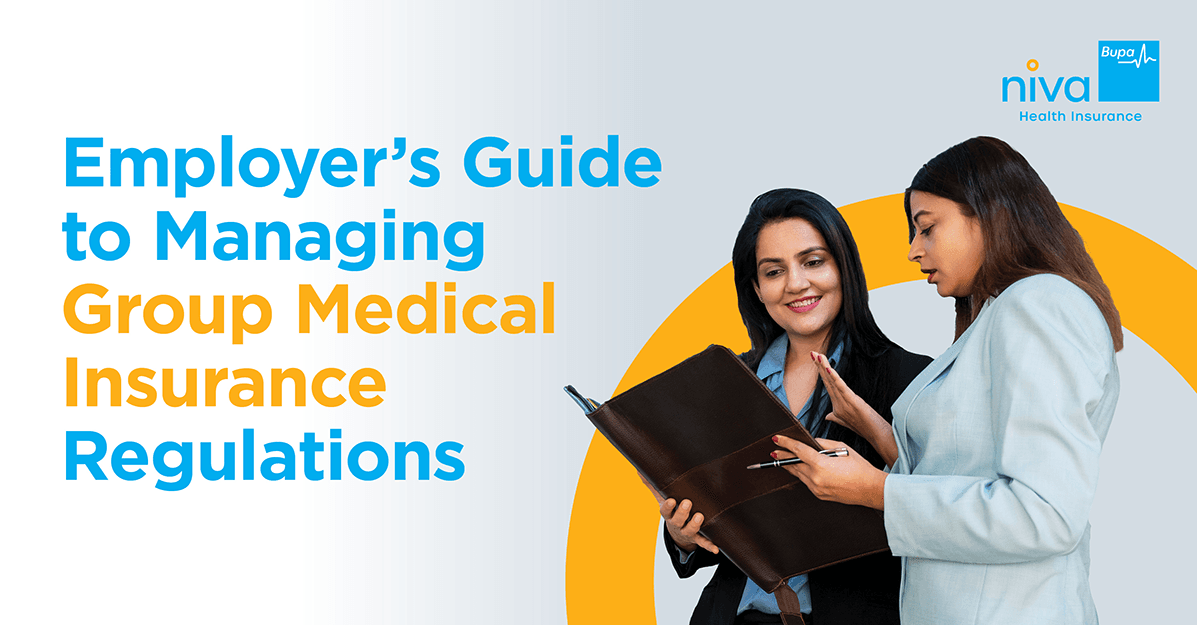
Group medical coverage is a benefit, offering employees peace of mind while promoting their overall well-being. However, in the middle of countless regulations and compliance requirements, understanding group medical insurance can often feel like a complex web. Understanding and managing these regulations is crucial for employers to ensure legal compliance and employee satisfaction.
Understanding Group Medical Coverage:
Group medical coverage refers to small business employee health insurance offered by employers to their employees. It typically covers a group of individuals under a single policy and is designed to provide financial protection against medical expenses, including hospitalisation, prescription drugs, and preventive care.
Employers can choose from a variety of small group medical insurance plans tailored to meet the diverse needs of their workforce. From traditional indemnity plans to managed care options like Health Maintenance Organisations (HMOs) and Preferred Provider Organisations (PPOs). This area caters to all budgets.
Group Medical Insurance Regulations
Group medical insurance regulations are a set of rules and guidelines established by regulatory authorities to govern the provision and management of group health insurance policies. These regulations aim to ensure fair and transparent practices within the insurance industry while protecting the interests of policyholders, employers, and insurance providers alike.
Abiding by group medical insurance regulations is crucial for several reasons:
1. Compliance with Regulatory Standards
Group medical coverage regulations are governed by a myriad of federal and state laws, including the Affordable Care Act (ACA), the Health Insurance Portability and Accountability Act (HIPAA), and the Employee Retirement Income Security Act (ERISA). Compliance with these regulations is non-negotiable and requires employers to stay abreast of any changes or updates to ensure adherence.
2. Ensuring Affordable Coverage
Small businesses, in particular, face unique challenges when it comes to offering small group medical insurance. The Affordable Care Act introduced provisions to facilitate access to affordable coverage for small businesses through small business employee health insurance. Employers can explore options to find competitively priced plans that meet their employees' needs while remaining cost-effective for the business.
3. Understanding Eligibility and Enrollment Requirements
Employers must be mindful of eligibility criteria and enrollment periods when offering group medical coverage to employees. While some regulations mandate coverage for all full-time employees, others allow certain eligibility restrictions based on factors such as tenure or job classification. It's essential to clearly communicate enrollment deadlines and eligibility criteria to employees to avoid misunderstandings or compliance issues.
4. Providing Essential Health Benefits
Group medical insurance plans must stick to the requirements outlined in the ACA, which mandates coverage for essential health benefits. These benefits encompass a broad range of services, including preventive care, maternity care, mental health services, and prescription drugs. Employers must ensure that their chosen plan provides comprehensive coverage that aligns with these essential health benefits to remain compliant with regulatory standards.
5. Tax Implications
Small business employee health insurance premiums are often tax-deductible for employers, making them a valuable investment in employee welfare and financial planning. However, understanding the complexities of tax implications associated with group medical insurance is crucial to maximise cost savings and remain compliant with IRS regulations.
Best Practices for Managing Group Medical Insurance
Effective management of group medical insurance is essential for both employers and employees to maximise the benefits of healthcare coverage. By implementing best practices, employers can ensure that their employees receive comprehensive coverage, timely care, and efficient claims processing. Here are some key best practices for managing group medical insurance:
1. Regular Review and Evaluation
The regulatory area surrounding group medical insurance constantly evolves, necessitating regular review and evaluation of existing plans. Employers should stay informed about changes in legislation and market trends to make informed decisions regarding coverage options and compliance requirements.
2. Effective Communication
Transparent and open communication is essential when managing group medical insurance. Employers should educate employees about their coverage options, eligibility criteria, and any changes to their benefits package to foster trust and transparency within the workplace.
3. Seeking Professional Guidance
Understanding group medical insurance regulations can be daunting, especially for small businesses with limited resources. Employers may benefit from seeking professional guidance from insurance brokers, consultants, or legal experts specialising in employee benefits to ensure compliance and optimise their insurance offerings.
4. Prioritising Employee Well-being
At its core, group medical insurance prioritises employee well-being and promotes a healthy workforce. Employers should view insurance coverage not just as a legal requirement but as an investment in their most valuable asset—their employees.
Final Words
Managing group medical insurance involves a delicate balance of compliance, affordability, and employee well-being. By prioritising these factors and staying informed about regulatory requirements, employers can confidently understand the complexities of group medical insurance, ensuring both legal compliance and employee satisfaction.
Here's where Niva Bupa Health Insurance can be a valuable partner. Their plans are designed to address these concerns, offering a wide range of coverage options to fit various budgets while meeting compliance standards. Additionally, Niva Bupa's focus on customer service and network of hospitals can contribute to employee satisfaction.
FAQ
1. What are the requirements for a group health insurance plan?
To offer a group health insurance plan in India, employers must meet specific health care requirements for employers as per industry regulations. A group must consist of at least 7 members (in most cases) and typically be registered as a company, association, or society.
As per prevailing group health insurance laws, the policy can only be issued to recognised groups like company employees or cooperative members. The employer is usually the policyholder, and employees are the beneficiaries. Compliance with employer health insurance laws ensures that the plan includes coverage for hospitalisation, daycare procedures, and maternity benefits (depending on the policy terms).
2. What is not covered in group health insurance?
Despite its comprehensive nature, group health insurance often excludes specific treatments and conditions. Standard exclusions include pre-existing conditions during the initial waiting period, cosmetic surgeries, alternative therapies (unless specified), and injuries due to substance abuse.
As outlined in group health insurance laws, insurers may also exclude coverage for experimental treatments and procedures not approved by medical authorities. Employers must be aware of these exclusions under employer health insurance laws while fulfilling the health care requirements for employers.
3. Is group medical insurance mandatory in India?
Yes, post-COVID-19, the health care requirements for employers in India were updated. As per IRDAI guidelines (2020), it is now mandatory for all employers to provide group health insurance coverage to employees returning to work during the pandemic.
These changes in employer health insurance laws were introduced to ensure workforce safety. While smaller businesses may not be legally bound under traditional group health insurance laws, those registered under the Shops and Establishments Acts or Factories Acts must comply with these mandates.
4. How is the premium for group medical insurance calculated?
Premiums for group health insurance are calculated based on several factors: number of employees covered, their average age, sum insured per individual, nature of business, claim history, and chosen add-ons like maternity or critical illness.
Under group health insurance laws, insurers can customise premiums depending on group size and risk profile. Depending on internal HR policies, employer health insurance laws allow businesses to co-contribute or fully fund premiums. Employers' health care requirements may also include offering a higher sum insured for senior employees or including family members at an additional cost.
5. Is group medical insurance part of CTC?
Yes, in most companies, group medical insurance is included as part of an employee’s Cost to Company (CTC). As per employer health insurance laws, the cost of premiums paid by the employer is a legitimate part of employee benefits and is often reflected in CTC calculations.
Including insurance under CTC also helps employers meet the health care requirements for employers more transparently. In line with group health insurance laws, many companies also allow top-ups or upgrades at the employee’s expense, offering flexibility within the framework of standard corporate plans.
Get flexible corporate insurance policies tailored to your company's unique needs.
 By clicking, I agree to Niva Bupa
 You may also like

Popular Searches
Health Insurance - Health Insurance | Best Family Health Insurance | Best Health Insurance For Senior Citizens In India | Health Insurance With Opd Cover | Mediclaim Insurance | Critical Illness Insurance | Personal Accident Insurance | Mediclaim Policy | Individual Health Insurance | Maternity Insurance | Best Health Insurance company | NRI Health Insurance
Health Insurance Schemes - PMMVY Login | PMJJBY Policy Status | Swasthya Sathi Card | PMSBY | ABHA Card Download | PMJJBY | Ayushman Card | PMMVY 2.0 | Ayushman Vay Vandana Card | PMMVY NIC IN रजिस्ट्रेशन | PMMVY 2.0 लॉगिन
Travel Insurance Plans - Travel Insurance | International Travel Insurance | Student Travel Insurance | Travel Insurance USA | Travel Insurance Canada | Travel Insurance Thailand | Travel Insurance Germany | Travel Insurance Dubai | Travel Insurance Bali | Travel Insurance Australia | Travel Insurance Schengen | Travel Insurance Singapore | Travel Insurance UK | Travel Insurance Vietnam | Travel Insurance Japan | Travel Insurance Spain | Travel Insurance Asia | Travel Insurance Netherlands | Travel Insurance Turkey | Travel Insurance Ireland | Travel Insurance Phillipines | Travel Insurace Italy | Travel Insurance France | Travel Insurance China | Travel Insurance Georgia | Travel Insurance South Africa | Travel Insurance Maldives | Travel Insurance Portugal | Travel Insurance Malaysia | Travel Insurance Qatar | Travel Insurance Poland | Travel Insurance Greece | Travel Insurance New zealand | Travel Insurance Saudi Arabia | Travel Insurance Sri Lanka
Become an Agent - Insurance Agent | Insurance Advisor | Licensed Insurance Agent | Health Insurance Consultant | POSP Insurance Agent | IRDA Certificate Download | IC 38 Exam | Insurance Agent vs POSP | IRDA Exam Syllabus | IRDAI Agent Locator | IRDA exam fee | Paise Kaise Kamaye | Ghar Baithe Paise Kaise Kamaye
Top Hospitals - Best Hospitals in Chennai | Top Hospitals in Delhi | Best Hospitals in Gurgaon | Best Hospitals in India | Top 10 Hospitals in India | Best Hospitals in Hyderabad | Best Hospitals in Kolkata | Best cancer hospitals in Bangalore | Best cancer hospitals in Hyderabad | Best cancer hospitals in Mumbai | Best cancer hospitals in India | Top 10 cancer hospitals in India
Others - Ayushman Bharat | Gst Refund for NRI on Health Insurance Premium | Health Insurance Tax Deductible
Health & Wellness - शिलाजीत के फायदे हिंदी | Weight Gain Diet in Hindi | Sat Isabgol Uses In Hindi | Aloe Vera Juice Benefits in Hindi | Dragon Fruit Benefits in Hindi | Akal Daad in Hindi | Acidity Home Remedies in Hindi | Nikat Drishti Dosh in Hindi | Yoga Benefits in Hindi | Laung Khane ke Fayde in Hindi | Leukoplakia in Hindi | Protien in 100g Paneer | Benefits of Rice Water For Skin | B12 Deficiency Symptoms in Hindi | Fibre Foods in Hindi | Chronic Disease Meaning in Hindi | Vitamin D Foods in Hindi | Blood Urea in Hindi | Beetroot Uses Good for Health
Calculator - BMI Calculator | Pregnancy Calculator | Pregnancy Calendar Based on Conception Date | Pregnancy Conception Date Calculator | Last Menstrual Period Calculator | BMR Calculator | GFR Calculator | Ovulation Calculator



www.nivabupa.com

+91 11 30902010

1860-500-8888

CIN: L66000DL2008PLC182918
IRDAI Registration No. 145

Corporate Office: 3rd Floor, Capital Cyberscape, Sector 59, Gurgaon
Registered Office: C-98, First Floor, Lajpat Nagar, Part 1, Delhi-110024, India


