

Heart Stress Test: Purpose, Procedure, and Results
23 June, 2025
4 Shares
286 Reads
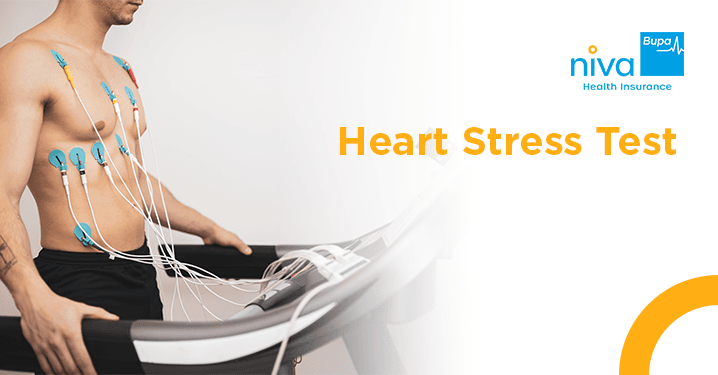
The heart of the human body is like the engine of a car. Without it, pumping fuel throughout the body to function seamlessly is impossible. Moreover, when there's too much pressure on the car, the engine starts functioning improperly. The same happens with a human's heart. When the mind feels pressured, stress is induced, thereby creating physical and psychological impact.
Today, stress-induced heart problems are increasing rapidly. In fact, a report by the Indian Heart Journal states that 92% of heart attack patients were diagnosed with moderate to high stress levels. What’s even more concerning about this claim is that most were found to be young individuals. Hence, it is essential to detect and treat them as early as possible.
Let’s discuss more about heart stress tests and their role in saving previous lives.
Why do you Need a Heart Stress Test?
A stress test for your heart is simply to assess how well it functions during any given physical activity. It is so because your heart does not take much load while at rest. On the other hand, when you do any activity, such as travelling to your workplace, the heart's workload increases.
In addition to evaluating your heart function, blood flow is also taken into account. Modern tests require either exercising or taking medications that may simulate the same effects as exercise. You may need this for many reasons, such as assessing coronary artery disease symptoms and monitoring treatments. This approach has proven to be reliable for cardiac health status assessment over the years.
Understanding the Procedure of Echocardiogram Test
An echocardiogram, popular by its shorter name 'echo', is a non-invasive stress test for your heart. In this, high-frequency sound waves (ultrasound) are used to produce detailed images of the heart's structure and function. It is an instrumental procedure when it comes to diagnosing various heart conditions. Here’s a quick walkthrough of how an echo test happens:
Preparation for the Test
Typically, a standard transthoracic echocardiogram requires minimal preparation. Patients are advised to wear comfortable clothing and may need to change into a hospital gown. It's important to inform the healthcare provider about any medications being taken or existing health conditions. For certain types of echocardiograms, such as a transesophageal echocardiogram, fasting for a few hours before the test might be necessary.
During the Procedure
The echocardiogram is usually conducted in a dimly lit room to enhance the visibility of the monitor displaying the heart images. The patient will be asked to lie on an examination table, often on their left side, to provide optimal access to the heart.
A technician, known as a sonographer, will attach small adhesive electrodes to the patient's chest to monitor heart activity throughout the procedure. A special gel is applied to the chest area to facilitate the transmission of sound waves. The sonographer then moves a device called a transducer across various positions on the chest. This transducer emits sound waves that bounce off the heart structures, creating live images on a monitor.
The patient may be instructed to change positions, hold their breath briefly, or perform specific breathing techniques to capture clear images from different angles. The procedure is painless, though slight pressure from the transducer might be felt.
After the Test
Once the imaging is complete, the sonographer will clean off the gel, removing the electrodes. Patients can typically resume their normal activities immediately after the test. A cardiologist will later review the images to assess heart function and structure, and the results will be discussed during a follow-up appointment.
Types of Echocardiograms
While the transthoracic echocardiogram is the most common, there are other variations of it as well:
- Transesophageal Echocardiogram: Guides a specialised transducer down the throat into the oesophagus to obtain more detailed images, which is especially useful when clearer visuals are needed.
- Stress Echocardiogram: Conducted before and after physical exercise or medication-induced stress to evaluate how the heart performs under exertion.
- Three-Dimensional Echocardiogram: Provides 3D images of the heart, offering more comprehensive views for certain assessments.
Interpreting Heart Stress Test
Once done with the procedure, comes time for the results. Your echo test reports, when delivered, the first thing you'd do is book an appointment with your doctor. Though there’s a brief interpretation guide, having an expert’s opinion is advisable.
Now, when booking an appointment for the same, you may end up on the waiting list. Given the urgency of heart-stress situations, having health insurance that offers just the solution can be extremely beneficial. At Niva Bupa, we have health plans with hassle-free access to a hospital network offering swift and quality assistance based on location.
For example, if the doctors have advised you to get a complete blood panel test after the echo. Well, you can get it done at the same hospital. This is something where our comprehensive plans stand out by offering extensive support via cashless facilities for all your medical needs.
Final Takeaway
To ensure your heart's good health is to make it a priority by following a healthy lifestyle and keeping a check on it regularly. By understanding your heart's response to stress and addressing any underlying issues, you can significantly reduce your risk of heart disease and live a longer, healthier life. With insurance plans in your palm that cover various checkup expenses, you can easily schedule tests like an echo, rapid flu test, blood test, etc.
Disclaimer: The details provided above are intended for informational purposes only. For accurate medical guidance, please consult your healthcare provider. Health insurance benefits are governed by the terms and conditions of your policy. For further details, review your policy documents.
FAQS
Is the echocardiogram test risky in any way?
No, the echocardiogram or echo test is not risky in any way. It is painless and involves rubbing a transducer on your chest, out of which ultrasound waves come out and get reflected back to get a recording of your heart’s performance.
Who interprets the heart stress test results?
A cardiology specialist is the right person to interpret the results of medical tests regarding the heart.
Are there any other ways to evaluate heart stress?
Stress-induced heart issues can be diagnosed under various types of tests. This may include the regular echo, transthoracic echo (TTE), transesophageal echo (TEE), stress echo, and modern 3D echo.
Get right coverage, right premium and the right protection instantly.
 By clicking, I agree to Niva Bupa
 You may also like



Popular Searches
Health Insurance - Health Insurance | Best Family Health Insurance | Best Health Insurance For Senior Citizens In India | Health Insurance With Opd Cover | Mediclaim Insurance | Critical Illness Insurance | Personal Accident Insurance | Mediclaim Policy | Individual Health Insurance | Maternity Insurance | Best Health Insurance company | NRI Health Insurance
Health Insurance Schemes - PMMVY Login | PMJJBY Policy Status | Swasthya Sathi Card | PMSBY | PMJJBY | Ayushman Card | PMMVY 2.0 | Ayushman Vay Vandana Card | PMMVY NIC IN रजिस्ट्रेशन | PMMVY 2.0 लॉगिन
Travel Insurance Plans - Travel Insurance | International Travel Insurance | Student Travel Insurance | Travel Insurance USA | Travel Insurance Canada | Travel Insurance Thailand | Travel Insurance Germany | Travel Insurance Dubai | Travel Insurance Bali | Travel Insurance Australia | Travel Insurance Schengen | Travel Insurance Singapore | Travel Insurance UK | Travel Insurance Vietnam | Travel Insurance Japan | Travel Insurance Spain | Travel Insurance Asia | Travel Insurance Netherlands | Travel Insurance Turkey | Travel Insurance Ireland | Travel Insurance Phillipines | Travel Insurace Italy | Travel Insurance France | Travel Insurance China | Travel Insurance Georgia | Travel Insurance South Africa | Travel Insurance Maldives | Travel Insurance Portugal | Travel Insurance Malaysia | Travel Insurance Qatar | Travel Insurance Poland | Travel Insurance Greece | Travel Insurance New zealand | Travel Insurance Saudi Arabia | Travel Insurance Sri Lanka
Become an Agent - Insurance Agent | IRDA Certificate Download | IRDA Exam Syllabus | IRDA exam fee | Paise Kaise Kamaye | Ghar Baithe Paise Kaise Kamaye
Top Hospitals - Best Hospitals in Gurgaon
Others - Ayushman Bharat | Gst Refund for NRI on Health Insurance Premium
Health & Wellness - शिलाजीत के फायदे हिंदी | Weight Gain Diet in Hindi | Sat Isabgol Uses In Hindi | Aloe Vera Juice Benefits in Hindi | Dragon Fruit Benefits in Hindi | Akal Daad in Hindi | Acidity Home Remedies in Hindi | Nikat Drishti Dosh in Hindi | Yoga Benefits in Hindi | Laung Khane ke Fayde in Hindi | Leukoplakia in Hindi | Protien in 100g Paneer | Benefits of Rice Water For Skin | B12 Deficiency Symptoms in Hindi | Fibre Foods in Hindi | Chronic Disease Meaning in Hindi | Vitamin D Foods in Hindi | Blood Urea in Hindi | Beetroot Uses Good for Health
Calculator - BMI Calculator | Pregnancy Calculator | Pregnancy Calendar Based on Conception Date | Pregnancy Conception Date Calculator | Last Menstrual Period Calculator | BMR Calculator | GFR Calculator | Ovulation Calculator



www.nivabupa.com

+91 11 30902010

1860-500-8888

CIN: L66000DL2008PLC182918
IRDAI Registration No. 145

Corporate Office: 3rd Floor, Capital Cyberscape, Sector 59, Gurgaon
Registered Office: C-98, First Floor, Lajpat Nagar, Part 1, Delhi-110024, India


