

What are the Main Types of Paralysis? A Complete Guide
29 July, 2025
9 Shares
773 Reads
Our nervous system functions as the command centre of the body. It controls and coordinates all bodily functions through a network of nerves and signals, and everything in between. Even the slightest nerve misfire can lead to a muscle twitch or a sudden shiver, then imagine how complex the journey of a condition as serious as Paralysis would be. The inability to move when you want to and do things for yourself, the worry is evident. In this blog, we will walk you through each and every aspect of paralysis, what its types are, how it happens, and what measures are taken to cure it. Read on to understand it better.
Paralysis: A Breakdown in Motion
When the body experiences a breakdown in the communication between the brain, spinal cord, and muscles, paralysis can occur. It may be partial or complete, temporary or permanent, but in all cases, it disrupts the body’s natural rhythm.
This disruption makes even the most basic movements difficult. Understanding the different types of paralysis is essential not only for patients but also for caregivers and loved ones who wish to provide meaningful support through the recovery journey.
Symptoms of Paralysis: Signals Your Body Can't Ignore
When your body starts showing the earliest signs of paralysis, it often begins subtly:
- Numbness or tingling in limbs
- Sudden fragility in a particular part of the body.
- Difficulty in controlling facial or limb movements
- Loss of sensation in a region
- Difficulty speaking or swallowing
4 Types of Paralysis That Define Its Impact
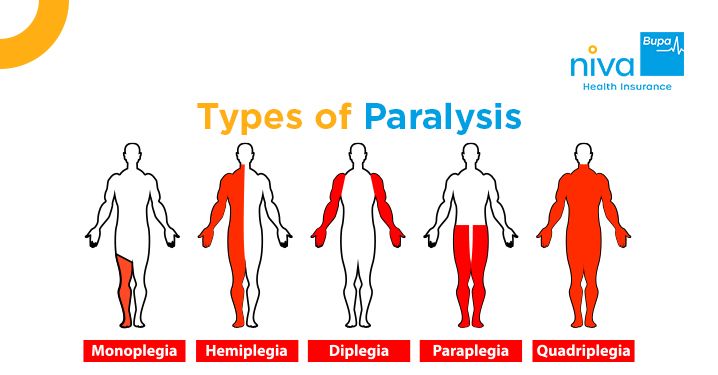
Considering the nerve and the particular brain areas, the impact of paralysis varies. Medical professionals classify types of paralysis based on the area affected. This helps determine both the severity of the condition and the most appropriate treatment options. The following are the four major types of paralysis that define how it presents and progresses.
Monoplegia
Monoplegia affects just one limb, usually an arm or leg. The individual loses control or movement in that single limb, while the rest of the body functions normally. This can significantly impact daily tasks, especially when the affected limb plays a dominant role in movement or support.
Causes: Monoplegia is often the result of cerebral palsy, nerve damage, localised stroke, or brain tumour.
Hemiplegia
Hemiplegia refers to paralysis on one side of the body, typically involving the arm and leg on the same side. People with hemiplegia often face difficulty with balance, coordination, and general mobility. The cause and how intense the illness is, the recovery can vary.
Causes: It can result from stroke, traumatic brain injury, or congenital conditions like cerebral palsy.
Paraplegia
Paraplegia is the loss of movement and sensation in the lower half of the body, typically affecting both legs and sometimes the lower abdomen. It may also interfere with bladder and bowel function. Wheelchairs and customised rehabilitation can also be a part of life for those dealing with paraplegia.
Causes: Most commonly caused by spinal cord injury, multiple sclerosis, or spinal tumours.
Quadriplegia
This one is also known as tetraplegia. It can lead to four-limb paralysis and might even include the torso. This form of paralysis greatly limits mobility and independence and may also affect breathing and other vital functions depending on the injury level.
Causes: Typically caused by severe spinal cord injury in the neck region, stroke, or neurological disorders.
Triggers Behind Paralysis: A Closer Look
While trauma is a common trigger, many internal medical conditions can also lead to paralysis. Understanding the cause helps in early intervention and better treatment outcomes.
- Stroke: When blood flow to a part of the brain stops, it can damage nerves responsible for movement.
- Spinal Cord Injuries: Damage to the spinal cord and a break in the nerve transmission due to an accident or a fall.
- Multiple sclerosis: A progressive disease that damages nerve coverings.
- Cerebral palsy: A birth condition affecting movement and muscle tone.
- Infections: Such as meningitis or Guillain-Barre Syndrome.
- Tumours: Can compress or damage nerves.
- Autoimmune diseases: Disorders like lupus may trigger muscle and nerve breakdown.
Managing Paralysis: Treatments & Therapies
Managing paralysis involves more than just physical recovery; it also requires mental and emotional rehabilitation. The key lies in combining the right medical support, rehabilitation plans, and financial preparedness.
Medication
Doctors often prescribe medicines to reduce inflammation, relieve pain, and manage underlying conditions like multiple sclerosis. In some cases, anticoagulants may be used to prevent strokes from recurring.
Physiotherapy
This is a cornerstone of paralysis management. Physical therapy helps maintain muscle tone, improve mobility, and prevent secondary complications like muscle atrophy and joint stiffness.
Occupational Therapy
OT helps patients relearn daily activities, such as dressing, bathing, or cooking, using adaptive techniques or tools, restoring a degree of independence over time.
Surgery
In specific cases, surgical intervention may be needed to relieve pressure on nerves, correct deformities, or implant devices that help in movement control.
Assistive Devices
Wheelchairs, mobility scooters, braces, and even advanced robotics can greatly improve mobility and quality of life for those living with paralysis.
Psychological Support
Dealing with paralysis can affect mental health. Counselling, support groups, and therapy play a crucial role in improving emotional resilience during recovery.
With Niva Bupa’s comprehensive health insurance plans, families can access high-quality care without worrying about treatment expenses. As India’s Best Health Insurer (Mint, 2024), and with over 1.4 crore satisfied customers, we ensure your journey to recovery is supported every step of the way.
What Can Go Wrong: Complications of Paralysis
Paralysis often comes with complications, especially if left unmanaged. Long-term care is essential to prevent these risks from worsening the patient’s quality of life.
- Pressure sores or bedsores
- Muscle atrophy
- Breathing difficulties
- Blood clots
- Urinary tract infections
- Depression and anxiety
Conclusion
Paralysis is a serious medical condition that affects not just the body, but the mind and lifestyle too. From recognising early symptoms to understanding the different types of paralysis and learning how to manage them effectively, this guide has explored all essential aspects. With the right medical intervention and adequate health insurance support, many individuals can still lead fulfilling lives. Whether temporary or permanent, partial or complete, paralysis can be navigated with strength, awareness, and the right resources.
People Also Ask
What are the main types of paralysis?
The four main types are monoplegia, hemiplegia, paraplegia, and quadriplegia, classified based on the region of the body affected.
Can paralysis be cured completely?
It depends on the cause and severity. Some types can improve with therapy, medication, and rehabilitation, while others may be permanent.
Is paralysis always caused by a spinal cord injury?
No, it can also result from strokes, neurological diseases, infections, or autoimmune disorders.
How can health insurance help manage paralysis treatment?
Health insurance covers hospitalisation, rehabilitation, medication, and therapy costs, ensuring financial relief during long-term recovery.
Are there preventive steps for paralysis?
Yes. Managing conditions like high blood pressure, avoiding head and spine injuries, and regular medical check-ups can help prevent potential triggers.
Get right coverage, right premium and the right protection instantly.
 By clicking, I agree to Niva Bupa
 You may also like



Popular Searches
Health Insurance - Health Insurance | Best Family Health Insurance | Best Health Insurance For Senior Citizens In India | Health Insurance With Opd Cover | Mediclaim Insurance | Critical Illness Insurance | Personal Accident Insurance | Mediclaim Policy | Individual Health Insurance | Maternity Insurance | Best Health Insurance company | NRI Health Insurance
Health Insurance Schemes - PMMVY Login | PMJJBY Policy Status | Swasthya Sathi Card | PMSBY | ABHA Card Download | PMJJBY | Ayushman Card | PMMVY 2.0 | Ayushman Vay Vandana Card | PMMVY NIC IN रजिस्ट्रेशन | PMMVY 2.0 लॉगिन
Travel Insurance Plans - Travel Insurance | International Travel Insurance | Student Travel Insurance | Travel Insurance USA | Travel Insurance Canada | Travel Insurance Thailand | Travel Insurance Germany | Travel Insurance Dubai | Travel Insurance Bali | Travel Insurance Australia | Travel Insurance Schengen | Travel Insurance Singapore | Travel Insurance UK | Travel Insurance Vietnam | Travel Insurance Japan | Travel Insurance Spain | Travel Insurance Asia | Travel Insurance Netherlands | Travel Insurance Turkey | Travel Insurance Ireland | Travel Insurance Phillipines | Travel Insurace Italy | Travel Insurance France | Travel Insurance China | Travel Insurance Georgia | Travel Insurance South Africa | Travel Insurance Maldives | Travel Insurance Portugal | Travel Insurance Malaysia | Travel Insurance Qatar | Travel Insurance Poland | Travel Insurance Greece | Travel Insurance New zealand | Travel Insurance Saudi Arabia | Travel Insurance Sri Lanka
Become an Agent - Insurance Agent | Insurance Advisor | Licensed Insurance Agent | Health Insurance Consultant | POSP Insurance Agent | IRDA Certificate Download | IC 38 Exam | Insurance Agent vs POSP | IRDA Exam Syllabus | IRDAI Agent Locator | IRDA exam fee | Paise Kaise Kamaye | Ghar Baithe Paise Kaise Kamaye
Top Hospitals - Best Hospitals in Chennai | Top Hospitals in Delhi | Best Hospitals in Gurgaon | Best Hospitals in India | Top 10 Hospitals in India | Best Hospitals in Hyderabad | Best Hospitals in Kolkata | Best cancer hospitals in Bangalore | Best cancer hospitals in Hyderabad | Best cancer hospitals in Mumbai | Best cancer hospitals in India | Top 10 cancer hospitals in India
Others - Ayushman Bharat | Gst Refund for NRI on Health Insurance Premium | Health Insurance Tax Deductible
Health & Wellness - शिलाजीत के फायदे हिंदी | Weight Gain Diet in Hindi | Sat Isabgol Uses In Hindi | Aloe Vera Juice Benefits in Hindi | Dragon Fruit Benefits in Hindi | Akal Daad in Hindi | Acidity Home Remedies in Hindi | Nikat Drishti Dosh in Hindi | Yoga Benefits in Hindi | Laung Khane ke Fayde in Hindi | Leukoplakia in Hindi | Protien in 100g Paneer | Benefits of Rice Water For Skin | B12 Deficiency Symptoms in Hindi | Fibre Foods in Hindi | Chronic Disease Meaning in Hindi | Vitamin D Foods in Hindi | Blood Urea in Hindi | Beetroot Uses Good for Health
Calculator - BMI Calculator | Pregnancy Calculator | Pregnancy Calendar Based on Conception Date | Pregnancy Conception Date Calculator | Last Menstrual Period Calculator | BMR Calculator | GFR Calculator | Ovulation Calculator



www.nivabupa.com

+91 11 30902010

1860-500-8888

CIN: L66000DL2008PLC182918
IRDAI Registration No. 145

Corporate Office: 3rd Floor, Capital Cyberscape, Sector 59, Gurgaon
Registered Office: C-98, First Floor, Lajpat Nagar, Part 1, Delhi-110024, India


