

Which Is the Largest City in India? Population vs Area Explained
30 April, 2026
10 Shares
1067 Reads
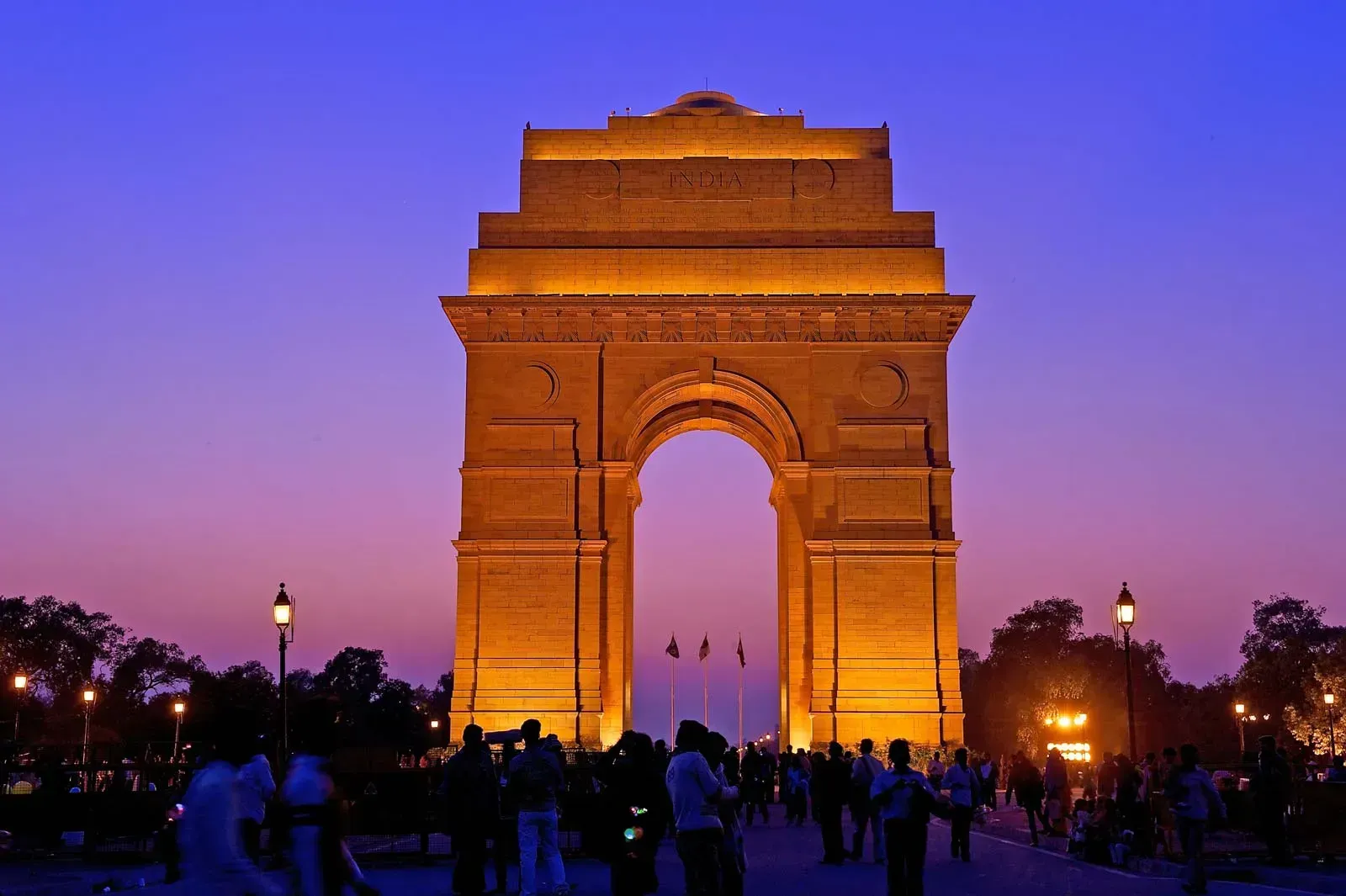
The answer to the question, “Which is the largest city in India?” depends on whether you look at land area or population. Delhi is the choice on both counts, covering 1,484 square kilometers and having a metropolitan population of about 35.5 million people. Mumbai was the leader in census data because of tight administrative limits, but Delhi is clearly the largest now when all urban areas and nearby towns are considered equally.
When you ask a group of people, "Which's the biggest city in India?" you often see an energetic discussion between Delhi and Mumbai. Both sides are not wrong; they simply use different ways to measure. Population counts and geographic size give pictures of India’s biggest cities. Knowing these details is very useful for people who work with policies for those who travel, for students, and for anyone who loves city planning. The question about the city in India can spark many opinions.
India is the most populated nation in the world and has some of the fastest-growing urban areas. In India, there are 75 cities that have over one million inhabitants. However, the actual figures vary depending on the criteria used in the various studies.
Why Is Defining City Size in India So Confusing?
The core confusion stems from how Indian administrative bodies categorise urban centres. The Census of India classifies cities into three distinct structural units:
Municipal City: The area of the city that is controlled by one local government. It has legal borders.
Urban Agglomeration (UA): This refers to an urban area consisting of the city itself and its adjacent suburbs and towns. These areas are interdependent in their economy, transport systems, and living styles. The UA indicates the pattern of growth and expansion of cities and their surrounding areas, which are dependent on the central city.
National Capital Territory (NCT): This type of territory exists exclusively for Delhi. It has its own system of governance.
A major boundary rule has historically skewed these comparisons: Urban Agglomerations in India cannot cross state lines. This rule artificially reduced Delhi's census numbers by leaving out major connected areas like Gurugram, Noida, Ghaziabad, and Faridabad just because they are located in neighbouring Haryana and Uttar Pradesh.
On the other hand, Mumbai is geographically contained within Maharashtra, which allowed its official Metropolitan Region to maintain a more consistent and unified count over the years. When we use a consistent method that looks at the actual functional urban area, Delhi stands out as the clear leader in both size and population.
Largest City by Population
Every modern demographic forecast says that Delhi is the largest city in the country. The whole Delhi region, which includes the National Capital Territory and its nearby towns, has thirty‑five point five million people. That makes Delhi one of the three most crowded urban areas in the world.
Historically, Mumbai was the city when only its municipal limits were counted, with eighteen point four million people in the 2011 Census compared to Delhi’s municipal count of sixteen point three million. Similarly, when such urban populations are considered as a whole, Delhi-NCR is much larger than the Mumbai Metropolitan Region even after all these years, and the gap keeps widening. The city of Delhi attracts individuals from all over Northern India, and the suburban areas of Delhi have become a continuous city extending kilometres in all directions.
Largest City by Geographic Area
When looking at the physical landmass alone, Delhi stands first. It covers 1,484 square kilometres as the National Capital Territory. Its municipal area is 2.5 times bigger than Mumbai’s 603 km² and twice the size of Bengaluru’s 741 km².
Mumbai grows where the land allows. It sits on a peninsula and on reclaimed islands. Because of that, Mumbai can only grow up. That makes Mumbai very crowded.
Delhi, in contrast, sits on the Indo‑Gangetic Plain. Over the years, Delhi has spread out. It has spread out flat and wide. Delhi has taken over farmlands, small villages and planned satellite towns.
Delhi vs. Mumbai: Head-to-Head Comparison
To get an idea of how India's two main power centres compare, look at their main geographic and economic details together:
While Delhi dominates raw spatial and demographic metrics, Mumbai compresses immense human activity into limited space. Pushing past 20,000 residents per square kilometre in many wards, Mumbai remains India's premier financial center, hosting the Bombay Stock Exchange (BSE), the National Stock Exchange (NSE), and the corporate headquarters of major banking conglomerates.
Top 10 Indian Metros by Population and Area
Here is how India's ten largest urban areas compare based on current demographic projections and geographical footprints:
(Note: Population figures reflect urban agglomeration estimates based on UN demographic models and census extrapolations.)
Healthcare and Safeguards in India's Metros
No matter if you are relocating to a megacity or travelling to one just for entertainment purposes, navigating through India’s large cities is not always easy. Long journey times, traffic, dynamic weather conditions, and health hazards associated with life in an urban environment mean that you should be prepared for any scenario.
For both travellers and people who commute every day, having protection can make a big difference. Choosing a trusted insurance plan like Niva Bupa Travel Insurance gives you safety from problems. It can cover emergencies, flight delays, or lost items, especially when you're moving through crowded and fast-moving transport systems all over the country.
Frequently Asked Questions
Q1. Which city is officially the largest in India?
Delhi is the city in India that has the total metropolitan population (about 35.5 million) and the biggest physical land area (1,484 square kilometres, for the NCT).
Q2. Is Mumbai larger than Delhi?
No. Delhi is far larger than Mumbai in both footprint and total population. Mumbai has a much higher population density, holding roughly twice as many residents per square kilometre.
Q3. Why do some older sources list Mumbai as India's city?
Historical figures from the 2011 Census categorised cities within state‑bounded Urban Agglomerations. This convention excluded Delhi's fast‑growing satellite cities (Noida, Gurugram, Ghaziabad) from its tally, leaving Greater Mumbai ahead on paper for a time. Modern metrics that count functional urban sprawl put Delhi firmly in front.a
Stay protected against medical emergencies, trip delays, and lost baggage worldwide.
 By clicking, I agree to Niva Bupa
 You may also like



Popular Searches
Health Insurance - Health Insurance | Best Family Health Insurance | Best Health Insurance For Senior Citizens In India | Health Insurance With Opd Cover | Mediclaim Insurance | Critical Illness Insurance | Personal Accident Insurance | Mediclaim Policy | Individual Health Insurance | Maternity Insurance | Best Health Insurance company | NRI Health Insurance
Health Insurance Schemes - PMMVY Login | PMJJBY Policy Status | Swasthya Sathi Card | PMSBY | ABHA Card Download | PMJJBY | Ayushman Card | PMMVY 2.0 | Ayushman Vay Vandana Card | PMMVY NIC IN रजिस्ट्रेशन | PMMVY 2.0 लॉगिन
Travel Insurance Plans - Travel Insurance | International Travel Insurance | Student Travel Insurance | Travel Insurance USA | Travel Insurance Canada | Travel Insurance Thailand | Travel Insurance Germany | Travel Insurance Dubai | Travel Insurance Bali | Travel Insurance Australia | Travel Insurance Schengen | Travel Insurance Singapore | Travel Insurance UK | Travel Insurance Vietnam | Travel Insurance Japan | Travel Insurance Spain | Travel Insurance Asia | Travel Insurance Netherlands | Travel Insurance Turkey | Travel Insurance Ireland | Travel Insurance Phillipines | Travel Insurace Italy | Travel Insurance France | Travel Insurance China | Travel Insurance Georgia | Travel Insurance South Africa | Travel Insurance Maldives | Travel Insurance Portugal | Travel Insurance Malaysia | Travel Insurance Qatar | Travel Insurance Poland | Travel Insurance Greece | Travel Insurance New zealand | Travel Insurance Saudi Arabia | Travel Insurance Sri Lanka
Become an Agent - Insurance Agent | Insurance Advisor | Licensed Insurance Agent | Health Insurance Consultant | POSP Insurance Agent | IRDA Certificate Download | IC 38 Exam | Insurance Agent vs POSP | IRDA Exam Syllabus | IRDAI Agent Locator | IRDA exam fee | Paise Kaise Kamaye | Ghar Baithe Paise Kaise Kamaye
Top Hospitals - Best Hospitals in Chennai | Top Hospitals in Delhi | Best Hospitals in Gurgaon | Best Hospitals in India | Top 10 Hospitals in India | Best Hospitals in Hyderabad | Best Hospitals in Kolkata | Best cancer hospitals in Bangalore | Best cancer hospitals in Hyderabad | Best cancer hospitals in Mumbai | Best cancer hospitals in India | Top 10 cancer hospitals in India
Others - Ayushman Bharat | Gst Refund for NRI on Health Insurance Premium | Health Insurance Tax Deductible
Health & Wellness - शिलाजीत के फायदे हिंदी | Weight Gain Diet in Hindi | Sat Isabgol Uses In Hindi | Aloe Vera Juice Benefits in Hindi | Dragon Fruit Benefits in Hindi | Akal Daad in Hindi | Acidity Home Remedies in Hindi | Nikat Drishti Dosh in Hindi | Yoga Benefits in Hindi | Laung Khane ke Fayde in Hindi | Leukoplakia in Hindi | Protien in 100g Paneer | Benefits of Rice Water For Skin | B12 Deficiency Symptoms in Hindi | Fibre Foods in Hindi | Chronic Disease Meaning in Hindi | Vitamin D Foods in Hindi | Blood Urea in Hindi | Beetroot Uses Good for Health
Calculator - BMI Calculator | Pregnancy Calculator | Pregnancy Calendar Based on Conception Date | Pregnancy Conception Date Calculator | Last Menstrual Period Calculator | BMR Calculator | GFR Calculator | Ovulation Calculator



www.nivabupa.com

+91 11 30902010

1860-500-8888

CIN: L66000DL2008PLC182918
IRDAI Registration No. 145

Corporate Office: 3rd Floor, Capital Cyberscape, Sector 59, Gurgaon
Registered Office: C-98, First Floor, Lajpat Nagar, Part 1, Delhi-110024, India


