

Which is the Oldest Country in the World? History, Facts & Myths
30 April, 2026
9 Shares
161 Reads
Share
I remember the first time someone asked me this question at a family dinner. My uncle, who loves history, threw it out casually between bites of his food. Everyone had a different answer. Someone said Egypt. Someone else said China. My cousin confidently said India. And honestly, we were all a little bit right and a little bit wrong.
The truth is, figuring out the oldest country in the world is not as simple as looking something up on Google and calling it a day. It depends on what you mean by "country," how you measure age, and whether you are talking about civilisations, empires, or modern states. Let us get into all of it.
First Things First: What Even Is A "Country"?
This might sound like an odd place to start, but it is actually the most important question. Because if you ask which is the oldest country in the world, the answer completely changes depending on how you define the word "country." Today, when we say country, we generally mean a place that has:
A fixed territory with recognised borders
Its own government that makes laws and decisions
A permanent population that lives there
Recognition from other nations in the world
Now here is the tricky part. Many ancient civilisations were incredible. They built monuments, wrote laws, traded across continents. But they were empires or kingdoms, not countries in the modern sense. They did not have fixed borders the way we think of them. They expanded, shrank, collapsed, and sometimes disappeared entirely. That is why this question is so much more interesting than it first appears.
The Strongest Contenders For The Oldest Country In The World
Before we get into the countries themselves, it is important to recognise that there is no single clear-cut answer to which is the oldest country in the world. Each nation on this list earns its place for a different reason, whether through continuous governance, enduring institutions, or a civilisational identity that has survived for millennia. Together, they offer a more complete picture of what “old” really means for nations.
San Marino
If you have never heard of San Marino, you are not alone. Most people have not. It is a tiny country, smaller than many Indian cities, sitting completely surrounded by Italy. But this little nation has one of the most impressive records in all of human history. San Marino was founded on 3rd September 301 AD by a stonemason named Marinus from the island of Rab. According to the story, he escaped religious persecution and established a small Christian community atop Mount Titano. That community eventually became a republic, and here is the remarkable thing: it has been governing itself, in roughly the same way, ever since.
Think about that for a moment. While empires rose and fell, while wars reshaped Europe again and again, while countries were born and died all around it, San Marino just kept quietly existing. Even Napoleon Bonaparte, who conquered most of Europe in the early 1800s, chose to leave San Marino alone out of respect for its age and independence.
San Marino also has one of the oldest written constitutions still in use today, dating back to the year 1600. For most historians, this is the clearest answer to the question of which is the oldest country in the world, at least when we are talking about an unbroken, self-governing state.
Japan
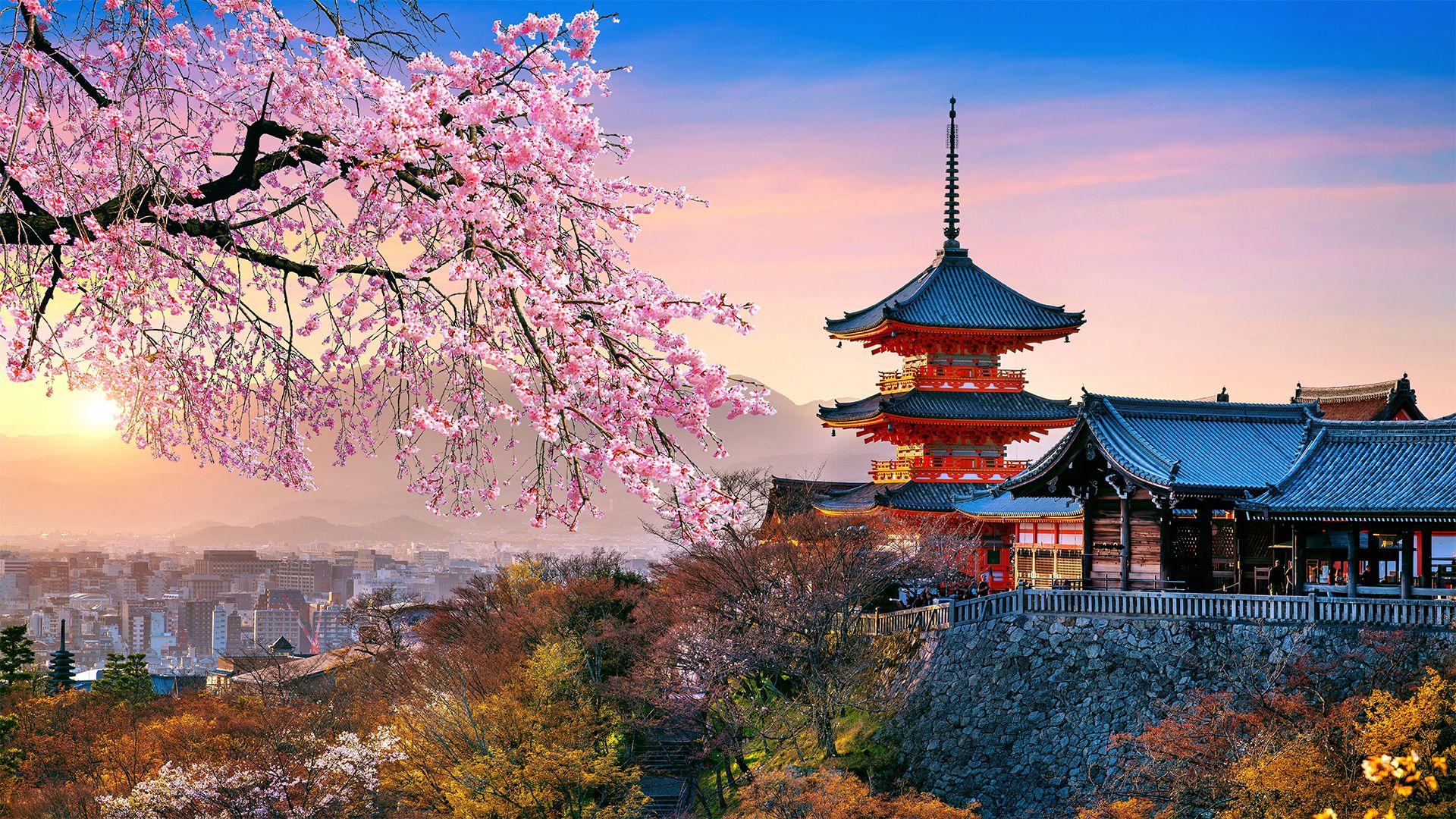
Japan is another country that comes up almost every time this topic is discussed, and for very good reason. Japanese tradition holds that the empire was founded in 660 BC by Emperor Jimmu, who was said to be a descendant of the sun goddess Amaterasu. Historians treat this founding date as more legend than fact, but what is not a legend is that Japan has maintained a continuous imperial line for well over a thousand years.
What makes Japan's case so interesting is that even when emperors had very little real political power, they were never removed. The institution survived wars, foreign invasions, internal power struggles, and even the devastation of the Second World War. Japan's identity as a nation, its culture, its language, and its sense of self have remained remarkably consistent over a very long stretch of time. That is genuinely rare in world history.
China
It is almost impossible to have this conversation without talking about China. Chinese civilisation stretches back thousands of years, and the region has had organised governments since at least the Shang Dynasty around 1600 BC, which is backed up by solid archaeological evidence.
But here is where it gets complicated. China's political history has not been one continuous, unbroken line. The country went through:
Multiple complete dynastic collapses where one ruling family was entirely replaced by another
Long periods of civil war and fragmentation, such as the Warring States period
Centuries of foreign rule, first under the Mongols and later under the Manchu Qing Dynasty
A revolution in 1949 that created an entirely new form of government
So while Chinese civilisation is among the oldest and richest in the world, the Chinese state has been reinvented several times over. That is an important distinction. Still, the cultural and civilisational continuity of China is unmatched, and no serious conversation about the oldest country in the world leaves China out.
Iran
Iran does not get mentioned as often as it should in these discussions. Modern Iran is built on the land of ancient Persia, and the history of organised states in that region goes back to at least 3200 BC with the Elamite civilisation. The Achaemenid Empire, founded by Cyrus the Great around 550 BC, was one of the greatest political achievements in human history.
What stands out about Iran is that through centuries of conquest, including Arab invasion, Mongol devastation, and repeated changes of dynasty, the Persian cultural and linguistic identity survived. People in Iran today speak a direct descendant of Old Persian. They still celebrate Nowruz, the Persian New Year, which is thousands of years old. That kind of civilisational continuity is extraordinary and earns Iran a firm place on this list.
Egypt
Egypt is probably the first name most people think of when they hear "oldest country in the world," and it is easy to see why. Ancient Egypt was building pyramids and writing history while much of the rest of the world was still figuring things out. Egyptian civilisation dates back to around 3100 BC when King Narmer unified Upper and Lower Egypt.
However, modern Egypt is a different story. Over the centuries, Egypt was ruled by the Greeks, then the Romans, then the Arabs, then the Ottomans, and then the British. Egypt only became a fully independent republic in 1953. So ancient Egypt is one of the world's greatest civilisations, but as a continuous, self-governing country, it is actually quite young.
Some Myths That Need To Be Put To Rest
Here are some myths that need to be mentioned that will better help you understand the question “which is the oldest country in the world?”.
Myth 1: The Oldest Civilisation And The Oldest Country Are The Same Thing
They are not. Mesopotamia, the land between the Tigris and Euphrates rivers in what is now Iraq, is often called the cradle of civilisation. It gave the world its first cities, its first writing system, and its first recorded laws. But Iraq as a country was created by the British in 1920. Having an ancient civilisation on your soil does not make your country old.
Myth 2: India Has No Claim In This Discussion
This surprises a lot of people. The Indus Valley Civilisation, which flourished around 2500 BC in parts of present-day India and Pakistan, was one of the most advanced urban cultures of its time. Ancient India gave the world mathematics, philosophy, literature, and a spiritual tradition that still shapes billions of lives. While modern India as a republic was born in 1947, the civilisational roots of the Indian subcontinent go back thousands of years and are among the deepest anywhere on earth.
Myth 3: Age Automatically Means Stability Or Success
Not at all. Some of the world's oldest states have had deeply troubled histories. Age is simply a measure of continuity, not of quality of life or governance. History does not reward or punish countries for being old. It just records what happened.
Read More : Which Country Has the Youngest Population in the World?
Conclusion
History has a funny way of humbling us. We assume the biggest, most famous places must have the oldest stories. But sometimes it is a tiny hilltop republic in Italy that has been quietly keeping its records straight for over 1,700 years.
What this journey through history really shows us is that continuity matters. Whether it is a nation, a culture, or a tradition, the things that last are the things that are protected, nurtured, and passed on with care. That same thinking applies to everyday life. The people and things you value most deserve that same kind of attention and protection. It is a philosophy that forward-thinking companies like Niva Bupa carry into their work, helping Indian families protect what matters most through health coverage that is built around real needs. The world is incredibly old, and every country on the map carries a story worth knowing. The oldest ones just happen to have the longest chapters.
FAQ’s
1. Which is officially the oldest country in the world?
There is no single official answer, because it depends on how you define a “country.” However, San Marino is often considered the world's oldest country due to its continuous existence as a self-governing republic since 301 AD.
2. Why is it difficult to identify the oldest country in the world?
The difficulty lies in the definition. Some countries are ancient in terms of civilisation, like Egypt or China, while others are older as continuous political states. Since these criteria differ, multiple countries can claim to be among the oldest.
3. Is India one of the oldest countries in the world?
India has one of the oldest civilisations, dating back to the Indus Valley around 2500 BC. However, as a modern nation-state, India became independent in 1947. So, it is culturally ancient but politically relatively young.
4. What is the difference between a civilisation and a country?
A civilisation refers to a long-standing culture, society, and way of life, often spanning thousands of years. A country, on the other hand, is a political entity with defined borders, a system of governance, and international recognition.
5. Which country has the oldest continuous government?
San Marino is widely recognised for having the oldest continuous government in the world. Its republican system has remained largely unchanged for over 1,700 years, making it unique in recorded history.
Stay protected against medical emergencies, trip delays, and lost baggage worldwide.
 By clicking, I agree to Niva Bupa
Popular Searches
Health Insurance - Health Insurance | Best Family Health Insurance | Best Health Insurance For Senior Citizens In India | Health Insurance With Opd Cover | Mediclaim Insurance | Critical Illness Insurance | Personal Accident Insurance | Mediclaim Policy | Individual Health Insurance | Maternity Insurance | Best Health Insurance company | NRI Health Insurance
Health Insurance Schemes - PMMVY Login | PMJJBY Policy Status | Swasthya Sathi Card | PMSBY | ABHA Card Download | PMJJBY | Ayushman Card | PMMVY 2.0 | Ayushman Vay Vandana Card | PMMVY NIC IN रजिस्ट्रेशन | PMMVY 2.0 लॉगिन
Travel Insurance Plans - Travel Insurance | International Travel Insurance | Student Travel Insurance | Travel Insurance USA | Travel Insurance Canada | Travel Insurance Thailand | Travel Insurance Germany | Travel Insurance Dubai | Travel Insurance Bali | Travel Insurance Australia | Travel Insurance Schengen | Travel Insurance Singapore | Travel Insurance UK | Travel Insurance Vietnam | Travel Insurance Japan | Travel Insurance Spain | Travel Insurance Asia | Travel Insurance Netherlands | Travel Insurance Turkey | Travel Insurance Ireland | Travel Insurance Phillipines | Travel Insurace Italy | Travel Insurance France | Travel Insurance China | Travel Insurance Georgia | Travel Insurance South Africa | Travel Insurance Maldives | Travel Insurance Portugal | Travel Insurance Malaysia | Travel Insurance Qatar | Travel Insurance Poland | Travel Insurance Greece | Travel Insurance New zealand | Travel Insurance Saudi Arabia | Travel Insurance Sri Lanka
Become an Agent - Insurance Agent | Insurance Advisor | Licensed Insurance Agent | Health Insurance Consultant | POSP Insurance Agent | IRDA Certificate Download | IC 38 Exam | Insurance Agent vs POSP | IRDA Exam Syllabus | IRDAI Agent Locator | IRDA exam fee | Paise Kaise Kamaye | Ghar Baithe Paise Kaise Kamaye
Top Hospitals - Best Hospitals in Chennai | Top Hospitals in Delhi | Best Hospitals in Gurgaon | Best Hospitals in India | Top 10 Hospitals in India | Best Hospitals in Hyderabad | Best Hospitals in Kolkata | Best cancer hospitals in Bangalore | Best cancer hospitals in Hyderabad | Best cancer hospitals in Mumbai | Best cancer hospitals in India | Top 10 cancer hospitals in India
Others - Ayushman Bharat | Gst Refund for NRI on Health Insurance Premium | Health Insurance Tax Deductible
Health & Wellness - शिलाजीत के फायदे हिंदी | Weight Gain Diet in Hindi | Sat Isabgol Uses In Hindi | Aloe Vera Juice Benefits in Hindi | Dragon Fruit Benefits in Hindi | Akal Daad in Hindi | Acidity Home Remedies in Hindi | Nikat Drishti Dosh in Hindi | Yoga Benefits in Hindi | Laung Khane ke Fayde in Hindi | Leukoplakia in Hindi | Protien in 100g Paneer | Benefits of Rice Water For Skin | B12 Deficiency Symptoms in Hindi | Fibre Foods in Hindi | Chronic Disease Meaning in Hindi | Vitamin D Foods in Hindi | Blood Urea in Hindi | Beetroot Uses Good for Health
Calculator - BMI Calculator | Pregnancy Calculator | Pregnancy Calendar Based on Conception Date | Pregnancy Conception Date Calculator | Last Menstrual Period Calculator | BMR Calculator | GFR Calculator | Ovulation Calculator



www.nivabupa.com

+91 11 30902010

1860-500-8888

CIN: L66000DL2008PLC182918
IRDAI Registration No. 145

Corporate Office: 3rd Floor, Capital Cyberscape, Sector 59, Gurgaon
Registered Office: C-98, First Floor, Lajpat Nagar, Part 1, Delhi-110024, India


