
How Does Ayurvedic Treatment in Health Insurance Works?
29 July, 2026
9 Shares
36 Reads
Share
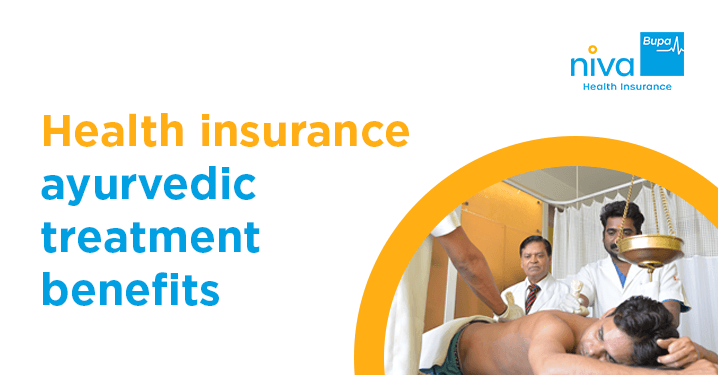
Ayurvedic treatment is now a covered medical expense under health insurance in India, not a niche benefit or a low-limit add-on, but a full-value entitlement under IRDAI's April 2024 Master Circular. As per this circular, all health insurers require to cover AYUSH treatments at par with allopathic care. That means the same sum insured, the same cashless network access, and no separate sub-limit standing between you and a valid claim.
The question most policyholders actually need answered is not whether AYUSH treatment in health insurance exists. It is how it works in practice, which treatments qualify, which facilities are eligible, what the claim process looks like, and where most people go wrong before they ever reach the hospital desk. This blog answers all of it, in the order that matters most.
What is AYUSH Treatment in Health Insurance?
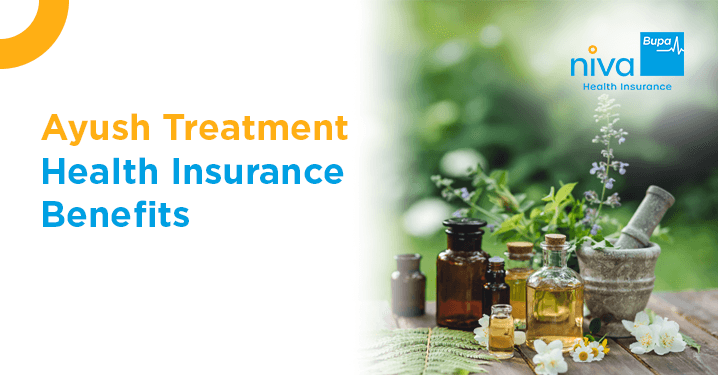
AYUSH treatment in health insurance refers to coverage for medically necessary inpatient treatment under Ayurveda, Yoga and Naturopathy, Unani, Siddha, and Homoeopathy at a government-recognised or accredited facility. The keyword in that sentence is inpatient. Insurance is designed to cover treatment of illness, not general wellness or retreat-style therapies, and that distinction is what determines whether a claim succeeds or fails.
In insurance terms, the important distinction is not just the therapy system being used but whether the treatment is happening in a facility that meets the insurer's recognition standards. Many Ayurveda centres market themselves as hospitals, but not all of them meet the insurer's definition of an eligible facility, which is why a claim can fail even when the treatment itself is entirely authentic.
NABH (National Accreditation Board for Hospitals and Healthcare) sets the quality standards that an AYUSH hospital must meet to be recognised as an eligible treatment facility for insurance claims.
What Did IRDAI's April 2024 Regulation Change?
Before April 2024, most health insurance policies either excluded AYUSH treatment in health insurance entirely or capped it at a sub-limit, often at ₹20,000 to ₹30,000 regardless of the sum insured. A policyholder with a ₹10 lakh health plan could still find their Ayurvedic hospitalisation claim capped at ₹25,000 under the old structure.
IRDAI's April 2024 Master Circular changed that. All health insurers are now required to cover AYUSH treatment at par with allopathic care with the same sum insured and no separate lower cap. Insurers must also build cashless AYUSH hospital networks, not just allow reimbursement after the fact.
Important for existing policyholders: Policies issued before April 2024 may still carry old sub-limit wordings until the next renewal. If your policy was last renewed before April 2024, check whether the AYUSH coverage terms were updated at renewal. Do not assume the new rules automatically apply to an old policy document.
What Does AYUSH Treatment Coverage Include and Exclude?
The single most important thing to understand about health insurance covering Ayurvedic treatment is this: Ayurveda is coverable, but not everything marketed as Ayurveda treatment is claimable. The table below makes the line clear.
Let us understand this from the example of Panchakarma. When Panchakarma is prescribed by a doctor for a diagnosed medical condition and administered as part of an inpatient admission at an accredited hospital, it can be covered. When the same treatment is offered as a 7-day detox package at a wellness resort, even one with 'Ayurvedic Hospital' on the signboard, it is not covered. The treatment name is the same. The context is entirely different.
Why Do AYUSH Treatment Claims Get Rejected?
Most AYUSH treatment claim rejections are not because Ayurveda is excluded from the policy. They happen because one of the eligibility conditions was not met, and the policyholder only found out after discharge. These are the three most common reasons:
The Treatment Was Outpatient
A visit to an Ayurvedic doctor, a follow-up consultation, or a course of herbal medication prescribed without hospitalisation is not covered under standard inpatient AYUSH treatment in health insurance. Unless the policy specifically includes OPD coverage, outpatient Ayurveda claims will be rejected.
The Facility Was Not Properly Accredited
The hospital does not need to be famous, but it does need to be registered under ROHINI (Registry of Hospitals in Network of Insurance) or accredited by NABH or QCI. A reputable Ayurveda centre that does not meet this definition is still outside the insurer's eligibility criteria.
The Documentation Described Wellness Rather Than Medical Treatment
If the hospital's discharge summary describes the admission as a 'general detox stay' or 'rejuvenation programme' rather than treatment for a diagnosed medical condition, the insurer has a clear basis to reject the claim regardless of what actually happened clinically.
Practical Tip: Before admission, ask the hospital whether they can issue a discharge summary that clearly documents the diagnosed condition being treated. This is not about framing but accuracy. If the clinical reason for admission is genuine, the documentation should reflect it.
How Do You Make an AYUSH Treatment Claim?
AYUSH treatment claims work through the same two routes as any other hospitalisation claim: cashless at a network hospital, or reimbursement after discharge. Which route applies depends on whether the AYUSH hospital is in your insurer's empanelled network.
Cashless claim route:
- Before admittance, make sure the AYUSH hospital is within your insurance provider's network
- Notify the insurer or TPA at least 48 hours before planned admission and 24 hours before emergencies.
- Submit pre-authorisation form at the hospital's insurance desk for the hospital to coordinate with the insurer
- Insurer approves treatment after the hospital bills the insurer directly
Reimbursement claim route:
- Pay hospital bills at discharge and collect all original invoices
- Gather complete documentation like discharge summary clearly stating the diagnosed condition, all original bills, prescriptions, and diagnostic reports
- File your claim within 30 days of discharge. Check your particular policy for the precise window
- The insurer then reviews and reimburses the amount
Conclusion
AYUSH treatment in health insurance is now real, substantive, and backed by IRDAI regulation. The old world of small sub-limits and routine exclusions is behind us; at least for policies renewed under the post-April 2024 terms.
What has not changed is the need to understand the conditions. The difference between a successful claim and a rejected one almost always comes down to the facility's accreditation, the nature of the treatment, and whether the documentation accurately reflects a medically necessary inpatient admission rather than a wellness stay.
Niva Bupa's health insurance plans, including ReAssure 2.0, cover AYUSH treatments at par with allopathic care, with cashless access across empanelled AYUSH hospitals and no sub-limit restrictions on compliant policies. If you are looking for a health insurance plan that covers Ayurvedic treatment, check the AYUSH terms of your existing plan with Niva Bupa before your next admission.
Frequently Asked Questions
1. Is Panchakarma covered under health insurance?
Only when prescribed for a diagnosed medical condition and taken as inpatient treatment at a NABH-accredited AYUSH hospital, and not when sold as a wellness or detox package.
2. Can I claim AYUSH treatment at any Ayurveda centre?
No, the center should have ROHINI certification along with NABH or QCI. No accredited clinic or wellness resorts is valid, no matter how much they claim to be.
3. Does my old policy automatically follow the new IRDAI 2024 AYUSH rules?
Renewal policies taken out before April 2024 may still have outdated language and sub-limit clauses. These must be formally changed on renewal.
4. Is an Ayurvedic doctor's consultation covered under health insurance?
It is possible only if the policy has the required OPD cover. Otherwise, regular inpatient AYUSH policies will not cover the outpatient consultations, check-ups, and prescription visits.
5. Are Yoga, Naturopathy, Unani, Siddha and Homoeopathy treatments covered the same way as Ayurveda?
Yes. AYUSH is a combined category and all five systems, Ayurveda, Yoga and Naturopathy, Unani, Siddha, and Homoeopathy, are covered on identical terms. The same conditions apply across all of them: the treatment must be inpatient, administered at a NABH or QCI-accredited facility, and prescribed for a diagnosed medical condition rather than general wellness.
6. What is the difference between NABH and QCI accreditation for AYUSH hospitals?
NABH accreditation is issued specifically for healthcare facilities and evaluates clinical protocols, patient safety standards, and hospital infrastructure. QCI, the Quality Council of India, is the broader national body under which NABH itself operates, and it also accredits AYUSH facilities through its own recognition programmes.
Get right coverage, right premium and the right protection instantly.
 By clicking, I agree to Niva Bupa
 You may also like
Popular Searches
Health Insurance - Health Insurance | Best Family Health Insurance | Best Health Insurance For Senior Citizens In India | Health Insurance With Opd Cover | Mediclaim Insurance | Critical Illness Insurance | Personal Accident Insurance | Mediclaim Policy | Individual Health Insurance | Maternity Insurance | Best Health Insurance company | NRI Health Insurance
Health Insurance Schemes - PMMVY Login | PMJJBY Policy Status | Swasthya Sathi Card | PMSBY | ABHA Card Download | PMJJBY | Ayushman Card | PMMVY 2.0 | Ayushman Vay Vandana Card | PMMVY NIC IN रजिस्ट्रेशन | PMMVY 2.0 लॉगिन
Travel Insurance Plans - Travel Insurance | International Travel Insurance | Student Travel Insurance | Travel Insurance USA | Travel Insurance Canada | Travel Insurance Thailand | Travel Insurance Germany | Travel Insurance Dubai | Travel Insurance Bali | Travel Insurance Australia | Travel Insurance Schengen | Travel Insurance Singapore | Travel Insurance UK | Travel Insurance Vietnam | Travel Insurance Japan | Travel Insurance Spain | Travel Insurance Asia | Travel Insurance Netherlands | Travel Insurance Turkey | Travel Insurance Ireland | Travel Insurance Phillipines | Travel Insurace Italy | Travel Insurance France | Travel Insurance China | Travel Insurance Georgia | Travel Insurance South Africa | Travel Insurance Maldives | Travel Insurance Portugal | Travel Insurance Malaysia | Travel Insurance Qatar | Travel Insurance Poland | Travel Insurance Greece | Travel Insurance New zealand | Travel Insurance Saudi Arabia | Travel Insurance Sri Lanka
Become an Agent - Insurance Agent | Insurance Advisor | Licensed Insurance Agent | Health Insurance Consultant | POSP Insurance Agent | IRDA Certificate Download | IC 38 Exam | Insurance Agent vs POSP | IRDA Exam Syllabus | IRDAI Agent Locator | IRDA exam fee | Paise Kaise Kamaye | Ghar Baithe Paise Kaise Kamaye
Top Hospitals - Best Hospitals in Chennai | Top Hospitals in Delhi | Best Hospitals in Gurgaon | Best Hospitals in India | Top 10 Hospitals in India | Best Hospitals in Hyderabad | Best Hospitals in Kolkata | Best cancer hospitals in Bangalore | Best cancer hospitals in Hyderabad | Best cancer hospitals in Mumbai | Best cancer hospitals in India | Top 10 cancer hospitals in India
Others - Ayushman Bharat | Gst Refund for NRI on Health Insurance Premium | Health Insurance Tax Deductible
Health & Wellness - शिलाजीत के फायदे हिंदी | Weight Gain Diet in Hindi | Sat Isabgol Uses In Hindi | Aloe Vera Juice Benefits in Hindi | Dragon Fruit Benefits in Hindi | Akal Daad in Hindi | Acidity Home Remedies in Hindi | Nikat Drishti Dosh in Hindi | Yoga Benefits in Hindi | Laung Khane ke Fayde in Hindi | Leukoplakia in Hindi | Protien in 100g Paneer | Benefits of Rice Water For Skin | B12 Deficiency Symptoms in Hindi | Fibre Foods in Hindi | Chronic Disease Meaning in Hindi | Vitamin D Foods in Hindi | Blood Urea in Hindi | Beetroot Uses Good for Health
Calculator - BMI Calculator | Pregnancy Calculator | Pregnancy Calendar Based on Conception Date | Pregnancy Conception Date Calculator | Last Menstrual Period Calculator | BMR Calculator | GFR Calculator | Ovulation Calculator


www.nivabupa.com

+91 11 30902010

1860-500-8888

CIN: L66000DL2008PLC182918
IRDAI Registration No. 145

Corporate Office: 3rd Floor, Capital Cyberscape, Sector 59, Gurgaon
Registered Office: C-98, First Floor, Lajpat Nagar, Part 1, Delhi-110024, India


