

How to Cover Parents in NRI Family Health Policy?
13 August, 2026
14 Shares
53 Reads
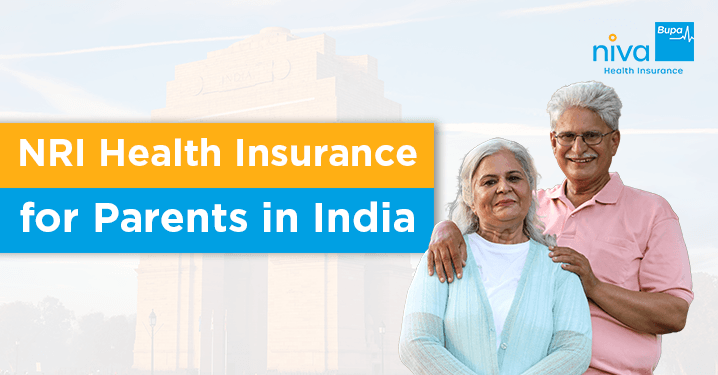
You have sorted your visa, your accommodation, your bank accounts abroad, and maybe even your own health cover in the country you live in. But have you sorted a health plan for your parents back in India? For a lot of NRIs, this one slips through the cracks until something actually happens, and by then, the stress of arranging money on top of worrying about a sick parent is genuinely overwhelming.
Parents getting older while you are living in a different country is a reality that most NRIs deal with quietly. You cannot always fly back at short notice, and even when you do, you cannot stay forever. What you can do is make sure that when your parents need medical attention, there is a health plan in place that takes care of the financial side of things. Good health insurance in India for your parents is not just a nice-to-have. For most NRI families, it is a necessity.
Can NRIs Buy Health Insurance In India For Their Parents?
Yes, and it is more straightforward than most people assume. You do not need to be sitting in India to buy a policy for your parents. Most insurers in India have moved their processes online, which means you can compare plans, fill out the application, and make the payment from wherever you are. The key condition is that your parents must be residents of India. The policy is built around India's healthcare system and hospital network, so the person being insured needs to be living in the country. As the proposer or the person buying the policy, you can be an NRI. Here are a few practical things to be aware of before you start:
Paying The Premium Is Easy From Abroad
RBI guidelines allow NRIs to use their NRE or NRO accounts to pay insurance premiums in India. You can pay via net banking or a debit card linked to these accounts. Setting up auto-renewal is also a good idea so the policy does not accidentally lapse while you are caught up with things on your end.
Everything Can Be Done Online
The proposal form, document uploads, and payment can all be handled digitally. If your parents need a pre-policy medical check-up, which is common for applicants above 45 or 50, the insurer usually has tie-ups with diagnostic centres near you where they can walk in without much hassle.
Disclosures Matter More Than You Think
When filling out the form, make sure all pre-existing conditions are disclosed honestly. Hiding a condition to get a lower premium can backfire badly at the time of a claim. It is always better to disclose everything upfront, even if it means a slightly higher premium or a longer waiting period.
Individual Plans vs Family Floater: What Works For Parents
This is a question that comes up often, and the answer depends on your parents' ages and health. Here is a straightforward look at both options to help you decide:
Individual Health Plans
An individual plan covers one person so that you would need two separate policies, one for your mother and one for your father. Each parent has their own sum insured, which means a claim by one does not affect the other's cover. For parents above 60 or those with existing health conditions, this is usually the better route. You can also tailor the sum insured for each parent based on their individual health needs, which is not possible in a floater.
Family Floater Plans
A family floater plan bundles both parents under a single policy with one shared sum insured. The premium tends to be lower than buying two individual plans, which makes it look attractive on the surface. The downside is that the sum insured is shared. If your father gets hospitalised for something serious and uses up most of the cover, your mother has very little left for the rest of the policy year. For younger parents in reasonably good health, a floater can work. For older parents, the individual route is generally safer.
Features That Actually Make A Difference
There are a lot of plans out there, and every insurer will tell you theirs is the best. Rather than going by marketing, here are the features that genuinely matter when buying health insurance in India for elderly parents. These are the things worth checking before you finalise anything:
Pre-Existing Disease Waiting Period
Almost every health plan has a waiting period before it starts covering pre-existing conditions. This can range from one year to four years. If your parents already have conditions like diabetes, blood pressure, or a thyroid issue, a shorter waiting period is something worth paying a bit more for. A plan with a four-year wait on pre-existing diseases is not very useful in the first few years for someone who actually needs that coverage.
Cashless Hospital Network
The cashless facility is the feature that matters most when you are not physically present in India. With cashless coverage, your parents can walk into a network hospital and get treated without having to arrange money upfront. The insurer pays the hospital directly. Make sure the plan you choose has a strong cashless network specifically in the city or town where your parents live, not just in big metros.
Room Rent Sub-Limits
Some plans put a daily cap on how much can be spent on a hospital room. If your parents end up in a room that costs more than that cap, the insurer proportionally reduces the entire claim, not just the room rent. This can result in a significantly lower payout than you expected. Look for plans that have no room rent capping, or at least a very high limit.
Top-Up Plans
Even a good base plan can fall short if there is a serious illness or a major surgery involved. A top-up plan or super top-up plan sits on top of your base plan and kicks in once the base cover is exhausted. The premium for these is usually quite reasonable, and they can significantly increase your parents' total coverage without a massive increase in cost.
Domiciliary Hospitalisation
There are times when a patient is too unwell to be moved to a hospital, or when home treatment is genuinely the more appropriate option. A plan that covers domiciliary hospitalisation ensures that your parents are still covered in these situations. This is particularly relevant for older patients.
AYUSH Cover
A lot of older Indians prefer traditional treatments like Ayurveda or Homeopathy over conventional medicine. If your parents are among them, a plan that includes AYUSH cover means they are not spending out of pocket on the treatments they actually want to use.
Mistakes Worth Avoiding
A few small mistakes at the time of buying can cause big problems later. These are the ones that come up most often when NRIs buy health insurance in India for their parents:
- Picking a plan based only on the premium without checking what is actually covered
- Not disclosing pre-existing conditions fully, which leads to claim rejection when it matters most
- Choosing a sum insured that is too low to account for serious illnesses or surgeries
- Not reading the exclusions carefully before signing off on a plan
- Skipping a top-up plan and assuming the base cover will always be enough
- Buying the policy and never actually explaining it to your parents, so they do not know how to use it when the time comes
Conclusion
Getting a health plan sorted for your parents while you are living abroad is one of those things that feels like a task until you actually do it, and then it becomes one less thing to worry about. Medical costs in India have gone up considerably, and without cover, even a short hospitalisation can turn into a financial strain for your parents. With so many good options available in NRI health insurance today, there is really no reason to put it off.
For NRIs looking for a health insurer that has a wide hospital network across India, transparent claim processes, and plans suited to different age groups and health needs, Niva Bupa is a name that many NRI families have come to trust for keeping their parents covered back home.
FAQ’s
1. Can an NRI buy a health plan for parents in India without being present there?
Yes, absolutely. The entire process of buying health insurance in India for your parents can be completed online. You do not need to visit India. Your parents may need to go for a medical check-up at a local diagnostic centre if the insurer asks for one, but your presence is not required at any point.
2. What account can NRIs use to pay health insurance premiums in India?
NRIs can pay premiums using their NRE or NRO accounts as per RBI guidelines. Net banking or debit cards linked to these accounts work for online payments, and auto-renewal can also be set up through these accounts.
3. Should NRIs go for an individual plan or a family floater for their parents?
For parents above 60 or those with existing health conditions, individual plans are the better choice. Each parent gets their own sum insured, so a large claim by one does not leave the other with insufficient cover. Family floaters work better for younger, healthier family members.
4. What happens if a pre-existing condition is not disclosed at the time of buying?
Non-disclosure of pre-existing conditions is one of the most common reasons for claim rejection. If the insurer finds out at the time of a claim that a condition was not disclosed at the time of application, they have the right to reject the claim or cancel the policy entirely. Always disclose everything honestly upfront.
5. How can NRI parents use their health plan during hospitalisation when the child is abroad?
Parents should call the insurer's 24/7 helpline as soon as hospitalisation is planned or happens in an emergency. Most insurers guide the patient through the cashless process over the phone. Having the e-card, policy number, and helpline number saved in advance makes this much easier to handle independently.
Get right coverage, right premium and the right protection instantly.
 By clicking, I agree to Niva Bupa
 You may also like


Popular Searches
Health Insurance - Health Insurance | Best Family Health Insurance | Best Health Insurance For Senior Citizens In India | Health Insurance With Opd Cover | Mediclaim Insurance | Critical Illness Insurance | Personal Accident Insurance | Mediclaim Policy | Individual Health Insurance | Maternity Insurance | Best Health Insurance company | NRI Health Insurance
Health Insurance Schemes - PMMVY Login | PMJJBY Policy Status | Swasthya Sathi Card | PMSBY | ABHA Card Download | PMJJBY | Ayushman Card | PMMVY 2.0 | Ayushman Vay Vandana Card | PMMVY NIC IN रजिस्ट्रेशन | PMMVY 2.0 लॉगिन
Travel Insurance Plans - Travel Insurance | International Travel Insurance | Student Travel Insurance | Travel Insurance USA | Travel Insurance Canada | Travel Insurance Thailand | Travel Insurance Germany | Travel Insurance Dubai | Travel Insurance Bali | Travel Insurance Australia | Travel Insurance Schengen | Travel Insurance Singapore | Travel Insurance UK | Travel Insurance Vietnam | Travel Insurance Japan | Travel Insurance Spain | Travel Insurance Asia | Travel Insurance Netherlands | Travel Insurance Turkey | Travel Insurance Ireland | Travel Insurance Phillipines | Travel Insurace Italy | Travel Insurance France | Travel Insurance China | Travel Insurance Georgia | Travel Insurance South Africa | Travel Insurance Maldives | Travel Insurance Portugal | Travel Insurance Malaysia | Travel Insurance Qatar | Travel Insurance Poland | Travel Insurance Greece | Travel Insurance New zealand | Travel Insurance Saudi Arabia | Travel Insurance Sri Lanka
Become an Agent - Insurance Agent | Insurance Advisor | Licensed Insurance Agent | Health Insurance Consultant | POSP Insurance Agent | IRDA Certificate Download | IC 38 Exam | Insurance Agent vs POSP | IRDA Exam Syllabus | IRDAI Agent Locator | IRDA exam fee | Paise Kaise Kamaye | Ghar Baithe Paise Kaise Kamaye
Top Hospitals - Best Hospitals in Chennai | Top Hospitals in Delhi | Best Hospitals in Gurgaon | Best Hospitals in India | Top 10 Hospitals in India | Best Hospitals in Hyderabad | Best Hospitals in Kolkata | Best cancer hospitals in Bangalore | Best cancer hospitals in Hyderabad | Best cancer hospitals in Mumbai | Best cancer hospitals in India | Top 10 cancer hospitals in India
Others - Ayushman Bharat | Gst Refund for NRI on Health Insurance Premium | Health Insurance Tax Deductible
Health & Wellness - शिलाजीत के फायदे हिंदी | Weight Gain Diet in Hindi | Sat Isabgol Uses In Hindi | Aloe Vera Juice Benefits in Hindi | Dragon Fruit Benefits in Hindi | Akal Daad in Hindi | Acidity Home Remedies in Hindi | Nikat Drishti Dosh in Hindi | Yoga Benefits in Hindi | Laung Khane ke Fayde in Hindi | Leukoplakia in Hindi | Protien in 100g Paneer | Benefits of Rice Water For Skin | B12 Deficiency Symptoms in Hindi | Fibre Foods in Hindi | Chronic Disease Meaning in Hindi | Vitamin D Foods in Hindi | Blood Urea in Hindi | Beetroot Uses Good for Health
Calculator - BMI Calculator | Pregnancy Calculator | Pregnancy Calendar Based on Conception Date | Pregnancy Conception Date Calculator | Last Menstrual Period Calculator | BMR Calculator | GFR Calculator | Ovulation Calculator



www.nivabupa.com

+91 11 30902010

1860-500-8888

CIN: L66000DL2008PLC182918
IRDAI Registration No. 145

Corporate Office: 3rd Floor, Capital Cyberscape, Sector 59, Gurgaon
Registered Office: C-98, First Floor, Lajpat Nagar, Part 1, Delhi-110024, India


