
What Are The Positive Impacts of GST On Health Insurance Policies?
2 January, 2025
9 Shares
1048 Reads
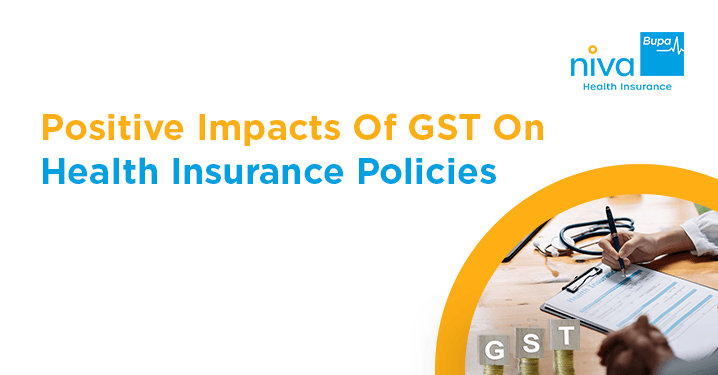
The Goods and Services Tax (GST), launched in 2017, has redefined India's taxation landscape, bringing clarity and uniformity to a once-fragmented system. For the health insurance sector, GST has been a game-changer, directly influencing affordability and accessibility for millions. Initially set at 18%, the current GST on health insurance sparked debates on cost barriers. However, the GST latest news from the 56th GST Council meeting on 3 September 2025 introduced a groundbreaking shift: zero GST on health insurance effective from 22 September 2025. This transformative reform promises to make health insurance more affordable, aligning with India's vision of universal coverage by 2047.
This blog delves into the positive impacts of GST on the health insurance sector, exploring how these changes empower policyholders and strengthen the industry.
Understanding GST and Its Relevance to Health Insurance
The Goods and Services Tax (GST) is a comprehensive indirect tax levied on the supply of goods and services across India. It operates under a multi-tier structure with tax slabs of 0%, 5%, 12%, 18%, and 28%, depending on the nature of the goods or services. For health insurance, GST is applied to the premium amount, directly affecting the cost borne by policyholders. The tax is split into Central GST (CGST) and State GST (SGST) for intrastate transactions, each at 9%, or Integrated GST (IGST) at 18% for interstate transactions.
Historical Context: Pre-GST vs. Post-GST
Before GST, health insurance premiums were subject to a 15% service tax, comprising a 14% basic service tax, 0.5% Swachh Bharat Cess, and 0.5% Krishi Kalyan Cess. The introduction of GST in 2017 increased the tax rate to 18%, raising concerns about affordability. However, the GST latest news from the 56th GST Council meeting, held on 3 September 2025, marked a significant shift by reducing the current GST on health insurance to zero, effective from 22 September 2025. This landmark decision aims to make health insurance more accessible and affordable, aligning with the vision of "Insurance for All by 2047."
Positive Impacts of GST on Health Insurance
Below given are the few positive impacts of this change in GST on health insurance:
Enhanced Affordability with Zero GST
The most transformative impact of the recent zero GST on health insurance is the reduction in premium costs. Previously, an 18% GST added a significant burden to policyholders. For instance, a health insurance plan with a base premium of ₹20,000 incurred an additional ₹3,600 in tax, making the total payable ₹23,600. With the GST exemption, policyholders now pay only the base premium, potentially reducing costs by approximately 15%. This affordability boost is expected to encourage more individuals, especially from middle-income and lower-income groups, to purchase health insurance, thereby increasing insurance penetration in India.
Simplified Taxation Structure
GST has streamlined the taxation process for health insurance by replacing multiple indirect taxes with a single, unified tax system. This simplification reduces compliance complexities for insurers, allowing them to focus on product innovation and customer service. The uniform tax structure across states ensures consistency in premium pricing, making it easier for consumers to compare policies and make informed decisions.
Input Tax Credit (ITC) Benefits (Pre-Exemption)
Before the zero GST on health insurance policy, insurers could claim Input Tax Credit (ITC) on GST paid for operational expenses, such as office rent, IT systems, and commissions. This mechanism helped insurers offset their tax liabilities, potentially stabilising premium rates. While the removal of GST eliminates ITC benefits, the overall reduction in premium costs is expected to outweigh this drawback, as insurers are encouraged to pass on savings to consumers.
Support for Government Schemes
Certain government-run health insurance schemes, such as the Universal Health Insurance Scheme and the Niramaya Health Insurance Scheme, have consistently been exempt from GST. This exemption supports economically weaker sections by ensuring affordable access to healthcare coverage. The GST latest news reinforces this commitment to social welfare by extending tax relief to all individual health insurance policies, further aligning with inclusive growth objectives.
Encouraging Higher Coverage and Penetration
The zero GST on health insurance is poised to drive higher insurance penetration by making policies more affordable. Industry experts estimate that this move could encourage first-time buyers and prompt existing policyholders to opt for higher sum insured amounts. Enhanced affordability reduces financial barriers, enabling more households to secure comprehensive health coverage, which is critical in a country where out-of-pocket medical expenses remain high.
Boost to the Healthcare Ecosystem
By reducing the cost of health insurance, GST reforms indirectly alleviate pressure on India's public healthcare system. Increased insurance penetration means fewer households rely on personal savings or loans for medical emergencies, leading to better financial stability and reduced strain on government healthcare resources. This shift supports a more resilient healthcare ecosystem, benefiting both individuals and the broader economy.
Challenges and Considerations
While the zero GST on health insurance is a significant step forward, it introduces challenges for insurers, particularly the loss of ITC. Insurers may face higher operational costs, which could lead to adjustments in base premiums. However, the government has assured that it will ensure savings are passed on to consumers, mitigating potential price hikes. The long-term success of this reform depends on insurers' ability to maintain transparency and discipline in pricing.
Comparison of Pre- and Post-GST Scenarios
The table below illustrates the impact of GST on a health insurance policy with a base premium of ₹15,000:
This table highlights the significant cost reduction achieved with the zero GST on health insurance, making policies more accessible to a wider population.
Conclusion
The introduction of GST and its subsequent reforms, particularly the zero GST on health insurance effective from 22 September 2025, have profoundly impacted the health insurance sector in India. By enhancing affordability, simplifying taxation, and supporting government initiatives, GST has made health insurance more accessible to the common man. The removal of the 18% GST is a landmark reform that aligns with India's goal of universal insurance coverage, reducing financial burdens and fostering a healthier, more financially secure society. As the industry adapts to these changes, the focus remains on ensuring that the benefits of these reforms reach policyholders, paving the way for a more inclusive and robust insurance ecosystem.
People Also Ask
What is the current GST rate on health insurance in India?
The current GST on health insurance is 0%, effective from 22 September 2025, as announced in the 56th GST Council meeting. Previously, it was 18%.
How does the zero GST on health insurance benefit policyholders?
The zero GST on health insurance reduces premium costs by approximately 15%, making policies more affordable and encouraging higher insurance penetration, especially among first-time buyers.
What was the tax rate on health insurance before GST?
Before GST, health insurance premiums were subject to a 15% service tax, which included a 14% basic service tax, 0.5% Swachh Bharat Cess, and 0.5% Krishi Kalyan Cess.
Are all health insurance policies exempt from GST?
Yes, all individual health insurance policies, including family floater plans and senior citizen policies, are exempt from GST as of 22 September 2025. Government-run schemes like the Universal Health Insurance Scheme were already exempt.
How does the removal of GST affect insurance companies?
Insurers lose Input Tax Credit (ITC) benefits, which may increase operational costs. However, the government is working to ensure that savings from the GST exemption on health insurance are passed on to consumers.
Can policyholders claim tax benefits on health insurance premiums?
Yes, under Section 80D of the Income Tax Act, policyholders can claim deductions on health insurance premiums, including GST paid before the exemption, up to ₹1 lakh, depending on age and coverage.
When will the zero GST on health insurance take effect?
The zero GST on health insurance will take effect from 22 September 2025, coinciding with the start of Navratri, as announced by Finance Minister Nirmala Sitharaman.
Get right coverage, right premium and the right protection instantly.
 By clicking, I agree to Niva Bupa
 You may also like


Health Insurance - Health Insurance | Best Family Health Insurance | Best Health Insurance For Senior Citizens In India | Health Insurance With Opd Cover | Mediclaim Insurance | Critical Illness Insurance | Personal Accident Insurance | Mediclaim Policy | Individual Health Insurance | Maternity Insurance | Best Health Insurance company | NRI Health Insurance
Health Insurance Schemes - PMMVY Login | PMJJBY Policy Status | Swasthya Sathi Card | PMSBY | PMJJBY | Ayushman Card | PMMVY 2.0 | Ayushman Vay Vandana Card | PMMVY NIC IN रजिस्ट्रेशन | PMMVY 2.0 लॉगिन
Travel Insurance Plans - Travel Insurance | International Travel Insurance | Student Travel Insurance | Travel Insurance USA | Travel Insurance Canada | Travel Insurance Thailand | Travel Insurance Germany | Travel Insurance Dubai | Travel Insurance Bali | Travel Insurance Australia | Travel Insurance Schengen | Travel Insurance Singapore | Travel Insurance UK | Travel Insurance Vietnam | Travel Insurance Japan | Travel Insurance Spain | Travel Insurance Asia | Travel Insurance Netherlands | Travel Insurance Turkey | Travel Insurance Ireland | Travel Insurance Philippines | Travel Insurance Italy | Travel Insurance France | Travel Insurance China | Travel Insurance Georgia | Travel Insurance South Africa | Travel Insurance Maldives | Travel Insurance Portugal | Travel Insurance Malaysia | Travel Insurance Qatar | Travel Insurance Poland | Travel Insurance Greece | Travel Insurance New zealand | Travel Insurance Saudi Arabia | Travel Insurance Sri Lanka
Become an Agent - Insurance Agent
Top Hospitals - Best Hospitals in Gurgaon
Others - Ayushman Bharat | Gst Refund for NRI on Health Insurance Premium
Health & Wellness - शिलाजीत के फायदे हिंदी | Weight Gain Diet in Hindi | Sat Isabgol Uses In Hindi | Aloe Vera Juice Benefits in Hindi | Dragon Fruit Benefits in Hindi | Akal Daad in Hindi | Acidity Home Remedies in Hindi | Nikat Drishti Dosh in Hindi | Yoga Benefits in Hindi | Laung Khane ke Fayde in Hindi | Leukoplakia in Hindi | Protein in 100g Paneer | Benefits of Rice Water For Skin | B12 Deficiency Symptoms in Hindi | Fibre Foods in Hindi | Chronic Disease Meaning in Hindi | Vitamin D Foods in Hindi | Blood Urea in Hindi | Beetroot Uses Good for Health
Calculator - BMI Calculator | Pregnancy Calculator | Pregnancy Calendar Based on Conception Date | Pregnancy Conception Date Calculator | Last Menstrual Period Calculator | BMR Calculator | GFR Calculator | Ovulation Calculator


www.nivabupa.com

+91 11 30902010

1860-500-8888

CIN: L66000DL2008PLC182918
IRDAI Registration No. 145

Corporate Office: 3rd Floor, Capital Cyberscape, Sector 59, Gurgaon
Registered Office: C-98, First Floor, Lajpat Nagar, Part 1, Delhi-110024, India


