

What is an OCI Card? OCI Card Meaning, Benefits, and Application Process
21 November, 2025
7 Shares
612 Reads
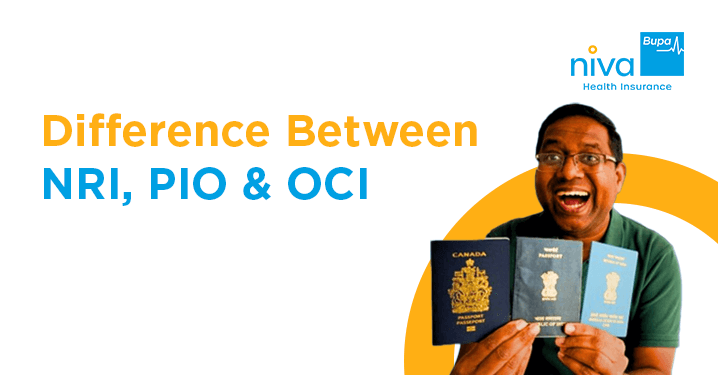
To some, the concept of "home" is connected to one location. To others, particularly the many Indians worldwide, home means something more: a sense, a past, and ties that cross borders. You may have heard tales of your grandparents' village, spent vacations with cousins, or had Indian meals while away. But when it comes to real-life issues such as traveling to India, residing there for extended periods, or investing there, the regulations for foreign nationals can be very strict.
That is why the Overseas Citizen of India card, or OCI card, was instituted. To many Indians overseas, it is not just a passport to visit; it allows them to remain rooted in the nation where their ancestors were from. While not technically having two passports, the advantages it provides have made it significant to individuals who wish to remain connected to India.
In this guide, we break down the OCI card meaning, put the spotlight on its advantages, consider who is eligible, and guide you through the application process step by step.
Understanding OCI Card
OCI card, or Overseas Citizen of India card, is an option for foreign nationals of Indian origin to enjoy permanent residency. The Government of India launched it in 2005 to enable Indians abroad to travel and remain connected with India, but not as full citizens.
India does not permit dual citizenship. OCI card is a suitable option since it provides long-term residence, work, and investment privileges in India. But it does not provide the responsibilities and political rights of a citizen.
OCI cardholders cannot vote, run for office, or buy agricultural land. However, they can travel to India without a visa for life and enjoy many benefits in areas like the economy, education, and culture.
Who Can Qualify for an OCI Card?
OCI cards are given to individuals who can establish that they are Indian. You may be eligible if:
You became Indian citizens on or after January 26, 1950.
You were in an area that belonged to India on the 15th of August, 1947.
Your parents, grandparents, or great-grandparents were citizens of India under the Constitution of India or the Citizenship Act, 1955.
You are a minor child who has at least one Indian citizen parent.
Your partner is an Indian citizen or an existing OCI cardholder, and your marriage is registered and has been effective for two years or more.
But there are regulations. Any person who has ever held Pakistani or Bangladeshi citizenship is ineligible to apply, even if their family members were in India before partition.
Read Also - Key Difference Between PIO and OCI: A Complete Guide
Advantages of Possessing an OCI Card
Before we enumerate them, we should say that the OCI card is not just a convenience; it's a practical and emotional connection for people whose lives are elsewhere.
Lifetime Visa-Free Travel
You no longer have to take out visas or get anxious about expiry dates. OCI cardholders enjoy a lifetime, multiple-entry visa for nearly any purpose, such as to visit relatives or for business. The exceptions include mountaineering, missionary activities, and research, which require advanced approval.
No Police Registration Requirement
Long-stay visa holders in India are often asked to register with the local administration if they stay longer than a certain duration. OCI card holders are exempt from all this, so long stays are trouble-free.
Equal treatment with NRIs in many areas
OCI holders enjoy the same benefits as Non-Resident Indians (NRIs) in the following aspects:
School admissions and school charges
Inter-country adoption
Local air ticket fares and gate fees
Purchasing residential homes and commercial properties (excluding farms)
For example, an OCI student applying to be admitted to an Indian university will go through the same admission process and pay the same fee as an NRI candidate, not an international candidate.
Banking and Investment Access
Opening a bank account, investing in a share, or even establishing a business in India is much easier if you own an OCI card. The card proves that you have a sincere, long-term interest in the Indian economy, which avoids bureaucratic hassles.
Employment Vacancies
OCI holders can freely work in most private sector jobs. They cannot work in the government, defence, or some research jobs. Private employment and entrepreneurship are allowed without additional licenses.
Unlimited Residency
You can retire in India, spend half a year, or travel for an extended period of time with no time constraint. That is a significant draw for a person with family or property in India.
How to Apply for an OCI Card
It is easy to use but requires accuracy. Most of the process is completed online, with an accompanying in-person filing of documents.
Step 1: Check Eligibility and Get Documents
You'll require:
A valid foreign passport
Documentary proof of Indian origin (e.g., vintage Indian passport, birth certificate, government documents)
Marriage certificate (if applying together with spouse)
Proof of relationship (if for children or grandchildren applying)
Step 2: Fill Out the Online Form
Visit the official OCI services portal of the Ministry of Home Affairs website. Fill out Part A, upload a recent passport-size photo, your signature (if more than 5 years old), and scanned documents in PDF.
Step 3: Turn in Paper Copies
Take a print of your application and forward it to your nearest Indian embassy/consulate (if you are outside India) or the FRRO office (if you are submitting from India), along with original documents for authentication.
Step 4: Pay the Fee
It differs in cost by country. For the UK, a new OCI application is around £200.
Step 5: Biometric and Final Verification
They may require you to provide your fingerprints or undergo an interview. Once they verify your documents, they will issue the OCI card to you.
Renewing or Acquiring a New OCI Card
Despite its applicability to life, an OCI card must be renewed in certain circumstances:
If your foreign passport status changes (under 20 or over 50 years of age)
If you change your name or country.
In case the card is lost or damaged
If your address changes
Keeping your information up to date helps avoid delays when travelling.
Limitations of an OCI Card
Recall that the OCI card is not complete citizenship. The major limitations are:
No right to vote or hold public office
No purchase of plantation/agricultural land
Limitations on government and defence employment.
Spousal status of OCI is withdrawn when the marriage is dissolved by divorce.
Why the OCI Card is Relevant Today
Nowadays, individuals reside in foreign countries outside the original homelands of their ancestors. The OCI card maintains the connection without relinquishing their adopted nationality. A Britisher who is born to Indian parents can start a technology company in Bengaluru on an OCI card, which spares them from having to make numerous visa applications.
A retired Canadian couple who would like to spend the winters in Goa also benefit from the OCI card because it spares them the yearly paperwork. For the student, the employee, and the entrepreneur, it is also important because it opens up opportunities in India.
Final Thoughts: Security Alongside Connection
The OCI card simplifies life for Indians abroad. It allows them to stay, work, and travel in India without the hassle of visas. But logistics such as healthcare, safe travel, and money matter equally for long stays or repeated visits. Several overseas insurers, such as Niva Bupa, provide health insurance policies that facilitate easy access to medical facilities for citizens and OCI cardholders. With the legal freedom of an OCI card and adequate insurance, you can live in India without worrying, knowing you are safe and yet have your roots.
FAQ’s
What is the difference between an OCI card and Indian citizenship?
An OCI card (Overseas Citizen of India) gives foreign nationals of Indian origin the right to live, work, and travel freely in India for life, but it does not grant political rights such as voting or holding public office. It is not the same as holding an Indian passport.
Who is eligible to apply for an OCI card?
You may be eligible if you or your parents, grandparents, or great-grandparents were Indian citizens after 26 January 1950, or lived in areas that became part of India after independence. Children with at least one Indian citizen parent and spouses of Indian citizens or OCI cardholders (married for at least two years) may also apply. However, anyone who has held Pakistani or Bangladeshi citizenship is ineligible.
Can OCI cardholders work in India?
Yes, OCI cardholders can work freely in most private sector jobs and start businesses in India without requiring additional visas. However, they cannot work in government, defence, or certain research positions that require Indian citizenship.
Does the OCI card need to be renewed?
Yes, in specific cases. Renewal is required if you obtain a new passport before the age of 20 or after the age of 50, change your name or nationality, or if the card is lost, damaged, or needs address updates.
Can an OCI cardholder buy property in India?
Yes, OCI cardholders can purchase residential and commercial property in India, but they are not permitted to buy agricultural land, plantations, or farmhouses.
Can OCI cardholders open bank accounts in India?
Yes. OCI cardholders are allowed to open Non-Resident External (NRE), Non-Resident Ordinary (NRO), and Foreign Currency Non-Resident (FCNR) accounts in Indian banks. These accounts allow them to manage earnings, investments, and remittances while residing abroad or in India, subject to RBI guidelines.
Are OCI cardholders required to register with FRRO in India?
No. Unlike most foreign nationals, OCI cardholders are exempt from registering with the Foreigners Regional Registration Office (FRRO) regardless of the length of their stay in India. This makes long-term residence and travel within India much simpler and more convenient.
Stay protected against medical emergencies, trip delays, and lost baggage worldwide.
 By clicking, I agree to Niva Bupa
 You may also like



Popular Searches
Health Insurance - Health Insurance | Best Family Health Insurance | Best Health Insurance For Senior Citizens In India | Health Insurance With Opd Cover | Mediclaim Insurance | Critical Illness Insurance | Personal Accident Insurance | Mediclaim Policy | Individual Health Insurance | Maternity Insurance | Best Health Insurance company | NRI Health Insurance
Health Insurance Schemes - PMMVY Login | PMJJBY Policy Status | Swasthya Sathi Card | PMSBY | ABHA Card Download | PMJJBY | Ayushman Card | PMMVY 2.0 | Ayushman Vay Vandana Card | PMMVY NIC IN रजिस्ट्रेशन | PMMVY 2.0 लॉगिन
Travel Insurance Plans - Travel Insurance | International Travel Insurance | Student Travel Insurance | Travel Insurance USA | Travel Insurance Canada | Travel Insurance Thailand | Travel Insurance Germany | Travel Insurance Dubai | Travel Insurance Bali | Travel Insurance Australia | Travel Insurance Schengen | Travel Insurance Singapore | Travel Insurance UK | Travel Insurance Vietnam | Travel Insurance Japan | Travel Insurance Spain | Travel Insurance Asia | Travel Insurance Netherlands | Travel Insurance Turkey | Travel Insurance Ireland | Travel Insurance Phillipines | Travel Insurace Italy | Travel Insurance France | Travel Insurance China | Travel Insurance Georgia | Travel Insurance South Africa | Travel Insurance Maldives | Travel Insurance Portugal | Travel Insurance Malaysia | Travel Insurance Qatar | Travel Insurance Poland | Travel Insurance Greece | Travel Insurance New zealand | Travel Insurance Saudi Arabia | Travel Insurance Sri Lanka
Become an Agent - Insurance Agent | Insurance Advisor | Licensed Insurance Agent | Health Insurance Consultant | POSP Insurance Agent | IRDA Certificate Download | IC 38 Exam | Insurance Agent vs POSP | IRDA Exam Syllabus | IRDAI Agent Locator | IRDA exam fee | Paise Kaise Kamaye | Ghar Baithe Paise Kaise Kamaye
Top Hospitals - Best Hospitals in Chennai | Top Hospitals in Delhi | Best Hospitals in Gurgaon | Best Hospitals in India | Top 10 Hospitals in India | Best Hospitals in Hyderabad | Best Hospitals in Kolkata | Best cancer hospitals in Bangalore | Best cancer hospitals in Hyderabad | Best cancer hospitals in Mumbai | Best cancer hospitals in India | Top 10 cancer hospitals in India
Others - Ayushman Bharat | Gst Refund for NRI on Health Insurance Premium | Health Insurance Tax Deductible
Health & Wellness - शिलाजीत के फायदे हिंदी | Weight Gain Diet in Hindi | Sat Isabgol Uses In Hindi | Aloe Vera Juice Benefits in Hindi | Dragon Fruit Benefits in Hindi | Akal Daad in Hindi | Acidity Home Remedies in Hindi | Nikat Drishti Dosh in Hindi | Yoga Benefits in Hindi | Laung Khane ke Fayde in Hindi | Leukoplakia in Hindi | Protien in 100g Paneer | Benefits of Rice Water For Skin | B12 Deficiency Symptoms in Hindi | Fibre Foods in Hindi | Chronic Disease Meaning in Hindi | Vitamin D Foods in Hindi | Blood Urea in Hindi | Beetroot Uses Good for Health
Calculator - BMI Calculator | Pregnancy Calculator | Pregnancy Calendar Based on Conception Date | Pregnancy Conception Date Calculator | Last Menstrual Period Calculator | BMR Calculator | GFR Calculator | Ovulation Calculator



www.nivabupa.com

+91 11 30902010

1860-500-8888

CIN: L66000DL2008PLC182918
IRDAI Registration No. 145

Corporate Office: 3rd Floor, Capital Cyberscape, Sector 59, Gurgaon
Registered Office: C-98, First Floor, Lajpat Nagar, Part 1, Delhi-110024, India


