

How Endometrial Thickness Affects Implantation and Early Pregnancy
19 May, 2026
9 Shares
136 Reads
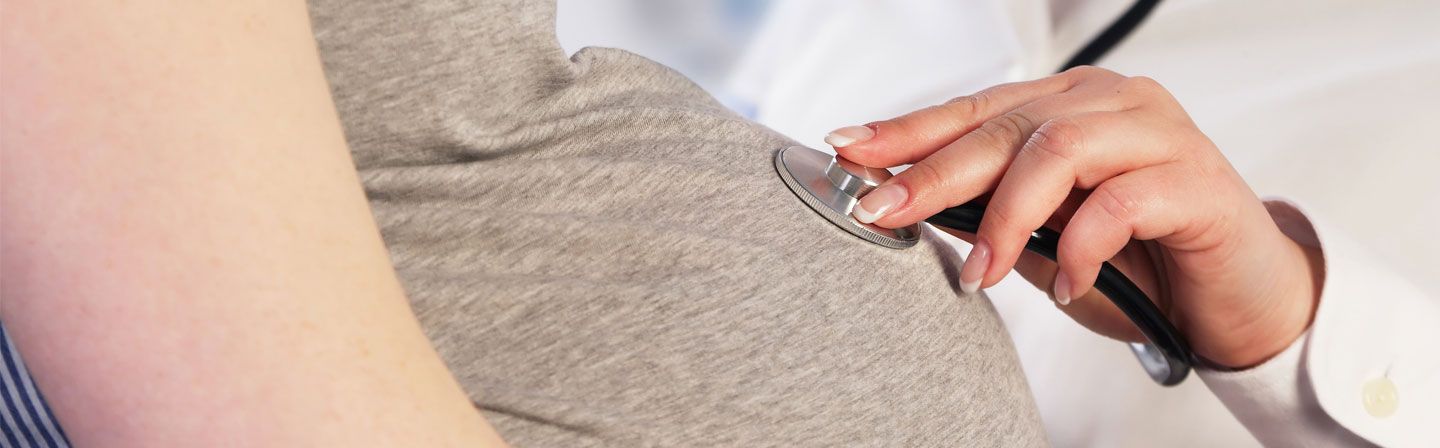
Knowing the complex frugality of the human reproductive system, one consequently arrives at a particular critical point: endometrial thickness. Since a lot of discussion on fertility is all about the quality of the egg and the motility of the sperm, the soil on which the seed is planted also plays a great part. The innermost layer of the uterus, namely the endometrium, forms the main touch point of an embryo, which forms the nutritional and physical surroundings required to enable the embryo to become pregnant. Its thickness is a dynamic parameter of uterine receptivity that changes across the menstrual cycle in response to hormones.
In people going through natural conception or assisted reproductive technologies (ART), including the In Vitro Fertilisation (IVF), the thickness of the endometrial lining becomes one of the key data items. Too thin a lining can prevent implantation, and one sufficiently prepared is a hospitable destination for a blastocyst. This manual examines how endometrial thickness pregnancy, the biology of implantation, and the initial phases of pregnancy drive the nature of this measurement, and it offers a detailed study of why this measure is a main pillar of reproductive health.
Pregnancy: Biological Thickness of the Endometrium
Endometrium is not a stagnant tissue; it is one of the most regenerative human body organs. The lining changes predictably under the influence of oestrogen and progesterone, which is referred to as the menstrual cycle. At the proliferative stage, the lining becomes thickened and richly vascularized due to the effect of oestrogen. After ovulation, at the secretory phase, progesterone converts this lining into a nutrient-filled cradle awaiting an embryo. This physiological setup is crucial since the embryo needs a certain amount of tissue to tear through and have contact with the maternal blood vessels to form a connection.
Optimal Endometrial Thickness and Implantation Success
Research consistently indicates that endometrial thickness pregnancy outcomes are highly correlated. A thickness of about 7mm to 10mm is considered a standard for successful implantation. A lining in this range of lining, which has a trilaminar (three-layered) appearance on an ultrasound, is a characteristic of high receptivity. This formation makes sure that the embryo is supplied with enough oxygen and glucose during the initial few imperative days following fertilisation. Lacking this volume, the embryo might have trouble anchoring itself, causing an implantation failure despite a healthy embryo.
Molecular Signalling and Embryo–Endometrium Communication
Moreover, the endometrial lining is a biosensor. It sends multiple signals to the embryo in several cytokines and growth factors. An efficient amount of these signalling molecules is found in the well-developed endometrium, and they assist the embryo in orienting and initiating the invasion of the trophoblast. This molecular dialogue will be broken should the lining be damaged. This may lead to rejection of the embryo or a lack of development of the embryo needed to form the placental connexions, thus the reason why the thickness is observed in fertility testing.
Decidualization and Immune Protection in Early Pregnancy
The factor of endometrial role in pregnancy is not limited to the first stick during pregnancy in case of early pregnancy. After the implantation, the lining becomes the decidua. This specialised tissue is the one that controls the immune response, and it is through this that the body of the mother does not have an immune response that attacks the embryo as a foreign object. The stronger the initial thickness is, the more solid topography is offered by this decisionalization. A healthy lining, therefore, not only assists in becoming pregnant but also in keeping the pregnancy once it has been conceived and during the initial weeks, which are the most delicate, where the risk of the pregnancy being lost occurs.
Factors Involved in Quality and the Depth of The Lining
The factors that determine whether an individual can experience the optimum endometrial thickness pregnancy can be of a few physiological and external nature. The most important thing is the hormonal balance. The most important of these is oestrogen, which is the most significant in building the lining. Diseases such as Polycystic Ovary Syndrome (PCOS) and premature ovarian insufficiency, which are conditions that lead to low oestrogen levels, tend to cause a thin endometrium. On the other hand, a high level of oestrogen with a low level of progesterone can lead to a lining that is already thick, but it is considered vulnerable or of poor quality, so that it will not readily accept an embryo.
Uterine Blood Flow and Structural Barriers to Conception
Another critical determinant is the blood flow to the region of the pelvic region. The radial arteries of the uterus should supply a continuous supply of arterial blood, rich in oxygen, to promote the growth of tissues. This flow of blood can be disrupted by aspects like an unhealthy lifestyle, smoking or specific conditions in the uterus like fibroids and polyps. In other instances, past surgeries involving the uterus, like D& C (Dilation and Curettage) surgery, may result in scarring, which is referred to as Asherman's Syndrome. The scar tissue does not allow the lining to thicken irrespective of the hormone levels, so in conception, this is a big challenge.
Age and Fertility Medications Affecting Endometrial Response
The role of age is not rigid, but still exists. Uterine tissues grow less responsive to hormones in old age, the fibrousness of the uterus can decline, and the vascularity of the uterus may decrease. Though an older person definitely can have an adequate lining, it takes more vigilance. Also, some of the hormonal agents involved in fertility treatments, like Clomiphene Citrate (Clomid), have been identified to produce a side effect of endometrial lining thinning in some patients, requiring them to switch to other procedures, like Letrozole or injected gonadotropins.
Lifestyle and Nutritional Influences on Endometrial Health
Lastly, one cannot disregard the lifestyle and nutritional condition. Examples of such conditions include iron deficiency anaemia, which can result in inadequate oxygen supply to the uterine tissues and an insufficiency of essential fatty acids, which may influence the inflammatory markers required to remodel the tissues. Stress also contributes to the release of cortisol that can constrict blood vessels and divert resources to other systems of the body. These underlying factors are often the initial points at which the optimisation of the uterine environment can be achieved in order to have a successful pregnancy.
Measuring and tracking the Endometrium Fertility Journey
Endometrial thickness pregnancy measurement, in clinical practise, is done through transvaginal ultrasound. It is a non-invasive procedure with the specialists able to visualise the "stripe" of the uterus and gauge it between opposite sides of its widest area. This is normally done just before ovulation or, in case of a frozen embryo transfer (FET), subsequent to a period of oestrogen supplementation.
It is a very accurate science in which the clinical decision of the transfer or choice of cancellation of a cycle through another preparation strategy is determined by a millimetre.
The smallest is 7mm, which is the minimum threshold for many. Although they have been known to carry through a pregnancy using a lining as thin as 5mm or 6mm, the statistical success rates go down considerably beyond the 7mm threshold. Clinical teams do not seek the number merely but the texture. The presence of a homogeneous or "hyperechoic" lining (on the ultrasound) due to a lifetime presence of progesterone before ovulation may sometimes point to an early increase in progesterone, thus ending the "implantation window. Therefore, the time when it is measured is similarly crucial as the thickness is.
In case a patient is discovered to have a continually thin lining, there are a number of medical procedures. They might involve high-dose oestrogen (taken orally, vagina, patches), anti-coagulant medications such as low-dose aspirin to enhance micro-circulation, or even "scratches against the uterine walls" in a bid to inflame a healing response that could cause the tissue to thicken. Other developed clinics are also considering the application of Platelet-Rich Plasma (PRP) Earthquakes into the uterus to spur cell regenerative activities. These interventions aim to bring the endometrial thickness pregnancy potential into the optimal range.
Conclusion
The process of parenthood and, more so, its observation of indicators such as endometrial thickness pregnancy is a scientific test and an emotional marathon. The ability to realise that the uterine lining is a living and dynamic tissue, which is subject to influence and improvement, is empowering. Either during natural conception or an IVF procedure, the health of your endometrium is a preventive measure in both ensuring a successful pregnancy and a healthy pregnancy. With the help of medical knowledge and changes in lifestyle, one can develop an optimal setting that will help in initiating life.
With these life-altering milestones ahead of you, it is just as crucial that you safeguard your well-being in general. Reproductive health is not the only aspect of your processes, and having an ally to assist in your general health care is a must. Niva Bupa Health Insurance offers extensive packages encompassing a broad range of health care needs and is a source of peace as it is going to belong to you, and you can concentrate on other things- your family. They have products such as cashless procedures and 24/7 care, where they are with you in all the parts and parcels of your life, so that your health is not in any way affected by the financial limitations.
To conclude, endometrial thickness pregnancy is a crucial indicator of implantation efficiency and stability of early pregnancy. Though an assessment of 7mm to 10mm is perfect, it is important to bear in mind that all bodies are different. Liaise closely with your health care provider to track your lining, consider available measures in case it is thin, and have a lifestyle which supports blood flow in the pelvis. Having proper preparation, be it in the medical sense or in sound insurance planning, you can surely sail the road to pregnancy confidently and with clarity.
FAQs
1. What endometrial thickness is good for pregnancy?
The optimal endometrial visible area on which a pregnancy may be attained is between 7mm and 11mm, approximately at the time of ovulation or embryo transfer. The lining inside this window is usually thick enough to support the required nourishment and physical dimensions for the burrowing embryo into the wall of the uterus. The clinicians usually search for a tri-laminar or three-layered structure on an ultrasound, indicating that the tissue is healthy and highly responsive. Although some successful pregnancies may be slightly out of this range, this gold standard has a major impact to giving probability of a healthy implantation taking place.
2. How much thickness is good for pregnancy?
Whereas a minimum thickness of 7mm is normally used as a clinical indication of a good outcome, a thickness of up to 10mm or 12mm is also indicated as excellent. Such depth provides the uterine context with utmost plushness and abundant blood vessels that are fundamental to the existence of the embryo during the initial days until the placenta assumes the duty. One is to keep in mind that quality is just as crucial as quantity; the lining that is moderately thick, with an internal structure that is healthy, can do so much better than the one that is very thick and that has not been properly prepared hormonally.
3. Can I get pregnant with a 7mm endometrial thickness?
Yes, it is possible at all to become pregnant with 7mm endometrial lining; this size is usually taken to be the normal range of the receptive uterus. A majority of fertility experts consider 7mm the lowest allowable thickness when performing procedures such as embryo transfer. Although a more pronounced lining can bring a little more favourable possibility of success, 7mm will serve as enough of a soil allowing the seed to root. When the level of your lining is regularly at such a state, your healthcare team may concentrate on additional variables such as the genetic well-being of the embryo or the period during which the implantation window may be most efficient so that your odds are maximised.
4. Is 14.2 mm endometrial thickness normal?
At the 14.2 mm point, the spectrum is thicker, though it may be anatomically right as long as it is in the right place at the right time in your body cycle. The lining is known to become as deep as it can during the secretory phase, an event that occurs after ovulation, but prior to a period that would start. But when the lining is more than 15mm or 16mm, the doctors can be able to probe further to determine the causes, such as endometrial hyperplasia or polyps. Now that the tissue is healthy on ultrasound, and that it is in sync with your cycle, the 14.2 mm of thickness is not something that should be a reason to worry.
Get right coverage, right premium and the right protection instantly.
 By clicking, I agree to Niva Bupa
 You may also like


Popular Searches
Health Insurance - Health Insurance | Best Family Health Insurance | Best Health Insurance For Senior Citizens In India | Health Insurance With Opd Cover | Mediclaim Insurance | Critical Illness Insurance | Personal Accident Insurance | Mediclaim Policy | Individual Health Insurance | Maternity Insurance | Best Health Insurance company | NRI Health Insurance
Health Insurance Schemes - PMMVY Login | PMJJBY Policy Status | Swasthya Sathi Card | PMSBY | PMJJBY | Ayushman Card | PMMVY 2.0 | Ayushman Vay Vandana Card | PMMVY NIC IN रजिस्ट्रेशन | PMMVY 2.0 लॉगिन
Travel Insurance Plans - Travel Insurance | International Travel Insurance | Student Travel Insurance | Travel Insurance USA | Travel Insurance Canada | Travel Insurance Thailand | Travel Insurance Germany | Travel Insurance Dubai | Travel Insurance Bali | Travel Insurance Australia | Travel Insurance Schengen | Travel Insurance Singapore | Travel Insurance UK | Travel Insurance Vietnam | Travel Insurance Japan | Travel Insurance Spain | Travel Insurance Asia | Travel Insurance Netherlands | Travel Insurance Turkey | Travel Insurance Ireland | Travel Insurance Phillipines | Travel Insurace Italy | Travel Insurance France | Travel Insurance China | Travel Insurance Georgia | Travel Insurance South Africa | Travel Insurance Maldives | Travel Insurance Portugal | Travel Insurance Malaysia | Travel Insurance Qatar | Travel Insurance Poland | Travel Insurance Greece | Travel Insurance New zealand | Travel Insurance Saudi Arabia | Travel Insurance Sri Lanka
Become an Agent - Insurance Agent | IRDA Certificate Download | IRDA Exam Syllabus | IRDA exam fee | Paise Kaise Kamaye | Ghar Baithe Paise Kaise Kamaye
Top Hospitals - Best Hospitals in Gurgaon
Others - Ayushman Bharat | Gst Refund for NRI on Health Insurance Premium
Health & Wellness - शिलाजीत के फायदे हिंदी | Weight Gain Diet in Hindi | Sat Isabgol Uses In Hindi | Aloe Vera Juice Benefits in Hindi | Dragon Fruit Benefits in Hindi | Akal Daad in Hindi | Acidity Home Remedies in Hindi | Nikat Drishti Dosh in Hindi | Yoga Benefits in Hindi | Laung Khane ke Fayde in Hindi | Leukoplakia in Hindi | Protien in 100g Paneer | Benefits of Rice Water For Skin | B12 Deficiency Symptoms in Hindi | Fibre Foods in Hindi | Chronic Disease Meaning in Hindi | Vitamin D Foods in Hindi | Blood Urea in Hindi | Beetroot Uses Good for Health
Calculator - BMI Calculator | Pregnancy Calculator | Pregnancy Calendar Based on Conception Date | Pregnancy Conception Date Calculator | Last Menstrual Period Calculator | BMR Calculator | GFR Calculator | Ovulation Calculator



www.nivabupa.com

+91 11 30902010

1860-500-8888

CIN: L66000DL2008PLC182918
IRDAI Registration No. 145

Corporate Office: 3rd Floor, Capital Cyberscape, Sector 59, Gurgaon
Registered Office: C-98, First Floor, Lajpat Nagar, Part 1, Delhi-110024, India


