

How Family Health Cover Helps You Save Tax Under Section 80D
22 May, 2026
9 Shares
91 Reads
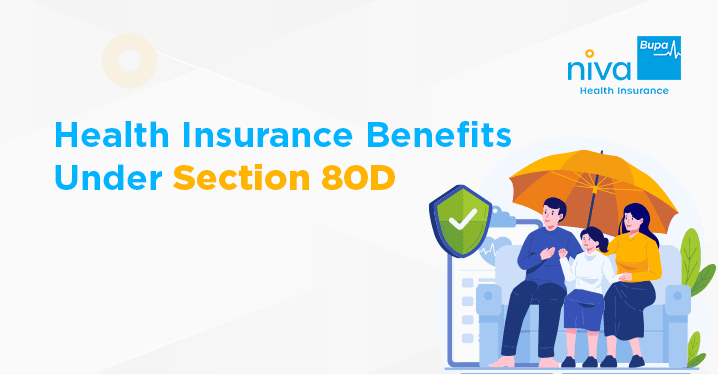
Effective tax planning in India is often viewed as a year-end scramble to save on outgoings, but the most astute financial strategies are those that provide dual protection. With healthcare inflation rising at double digits annually, a comprehensive family medical plan is no longer just a safety net for your health; it is one of the most efficient tools for legal tax suppression. Leveraging the section 80D health insurance tax benefit allows you to protect your family’s physical well-being while significantly reducing your taxable income.
For the average Indian taxpayer, the intersection of health and finance is where Section 80D becomes indispensable. Unlike Section 80C, which is often exhausted by mandatory contributions like EPF or Life Insurance, Section 80D offers an exclusive window for income tax savings health insurance plans. By understanding how to structure your family cover, you can shield a substantial portion of your hard-earned money from the taxman.
What is Section 80D of the Income Tax Act?
Section 80D is a specific provision within the Income Tax Act of 1961 that allows individuals and Hindu Undivided Families (HUFs) to claim deductions for premiums paid toward health insurance policies. While Section 80C focuses on investments and savings, Section 80D is designed specifically to encourage citizens to take responsibility for their healthcare costs.
This section is unique because it allows for tiered deductions. You can claim tax benefits not just for yourself, but also for your spouse, dependent children, and parents. This makes the tax benefits of health insurance India particularly attractive for those supporting elderly parents, as the deduction limits are higher for senior citizens.
What is the Section 80D Health Insurance Tax Benefit?
The section 80D health insurance tax benefit refers to the amount you can subtract from your total gross income before calculating your tax liability. By paying for a family health insurance policy, you effectively lower the "taxable" portion of your salary or business income.
This benefit is available to those opting for the Old Tax Regime. While the New Tax Regime offers lower initial slabs, it does not currently allow for Section 80D deductions. Therefore, for families with high medical insurance outlays, the Old Tax Regime coupled with Section 80D often results in lower overall tax payments.
Who Can Claim Section 80D Tax Benefits?
To claim Section 80D deductions family health insurance, you must fall into one of the following categories:
- Individuals: You can claim for yourself, your spouse, and your dependent children.
- HUF: A Hindu Undivided Family can claim for any member of the family.
- Caretakers of Parents: One of the most significant advantages is the ability to claim an additional deduction for premiums paid for your parents, regardless of whether they are dependent on you or not.
Deduction Limits Under Section 80D
The amount you can save depends on the age of the individuals covered under the policy. The Indian government has structured these limits to provide greater relief to those caring for senior citizens.
For Individuals and Families
If you, your spouse, and your children are all below the age of 60, the maximum deduction you can claim is ₹25,000 per financial year. This covers the premium paid for a family floater or individual plans for the nuclear family unit.
For Senior Citizens
If you are a senior citizen (aged 60 or above) paying for your own insurance, or if the primary insured in a family plan is a senior citizen, the limit increases to ₹50,000.
For Parents
One of the best income tax savings health insurance plans strategies involves covering your parents.
- If your parents are below 60, you get an additional ₹25,000 deduction.
- If your parents are senior citizens (above 60), the additional deduction is ₹50,000.
Summary Table of Limits
What Premiums Qualify for Tax Deduction?
Not every payment made to an insurance company qualifies for the section 80D health insurance tax benefit. To ensure your claim is valid, keep the following in mind:
- Mode of Payment: Premiums must be paid through "non-cash" modes. This includes credit/debit cards, net banking, or cheques. If you pay your health insurance premium in cash, you lose the tax benefit entirely.
- Government Schemes: Contributions made to the Central Government Health Scheme (CGHS) also qualify for deduction under this section.
- Preventive Health Check-ups: Within the overall limits mentioned above, you can claim up to ₹5,000 for expenses incurred on preventive health check-ups. Interestingly, this specific sub-limit can be claimed even if the payment was made in cash.
How Family Health Insurance Helps Maximise Section 80D Benefits
Choosing a family floater plan is often the most strategic way to utilise Section 80D deductions family health insurance. Instead of managing multiple individual policies with separate paperwork, a single family cover allows you to track your premium outlays easily for tax filing.
Furthermore, many modern family plans, like those offered by Niva Bupa, allow for "multi-year" policies. If you pay a two-year or three-year premium upfront, you can still claim the deduction proportionately over those years, ensuring consistent tax savings throughout the policy tenure.
Additional Tax Benefits Beyond Premiums
Beyond the standard premium, the tax benefits of health insurance India extend to medical expenditures for very senior citizens.
If you have parents who are 80 years or older (super senior citizens) and do not have a health insurance policy (perhaps due to age or pre-existing conditions), you can claim a deduction of up to ₹50,000 for their actual medical expenses incurred during the year. This provides a vital cushion for families managing the healthcare costs of the elderly without formal insurance.
Common Mistakes to Avoid While Claiming Section 80D Benefits
Even with the best income tax savings health insurance plans, a few simple errors can lead to your deduction being rejected by the Income Tax Department:
- Cash Payments: As mentioned, paying premiums in cash for the main policy is a fatal error for tax planning.
- Claiming for In-laws: You can claim deductions for your own parents, but you cannot claim for premiums paid for your father-in-law or mother-in-law.
- Siblings and Extended Family: Deductions are not available for premiums paid for siblings, grandparents, or other relatives.
- Group Insurance: If your employer pays your premium for a corporate group cover, you cannot claim a deduction. You can only claim for the portion of the premium that is actually deducted from your taxable salary.
Documents Required to Claim Section 80D Health Insurance Tax Benefit
While you do not need to attach documents to your Income Tax Return (ITR), you must maintain a file in case of a tax audit or inquiry. The essential documents include:
- Premium Receipt: This is the primary document issued by insurers like Niva Bupa, which clearly mentions the amount paid and the section (80D) under which it is eligible.
- Policy Certificate: To prove the relationship and ages of the family members covered.
- Proof of Payment: Bank statements or credit card statements showing the non-cash transaction.
- Medical Bills: If claiming for a super senior citizen's medical expenditure or preventive health check-ups.
Why Choose Niva Bupa for Family Health Insurance
Niva Bupa designs its policies to be as tax-efficient as they are health-efficient. When you invest in a Niva Bupa plan, you are not just getting a receipt for the section 80D health insurance tax benefit, you are gaining access to a comprehensive healthcare ecosystem.
- Comprehensive Tax Certificates: We provide clear, easy-to-download tax certificates that simplify your ITR filing process.
- Customised Family Covers: Our plans are structured to help you reach the maximum ₹75,000 or ₹100,000 deduction limits by including parents and senior citizens effectively.
- Cashless Healthcare: Beyond tax savings, our massive network of hospitals ensures that your focus remains on recovery, not on arranging funds.
- Wellness Incentives: Niva Bupa rewards you for staying healthy, which can lead to lower premiums in the long run, further optimising your financial outlays.
Tax saving should never be the only reason to buy health insurance, but it is certainly a rewarding byproduct of a responsible decision. By choosing a robust family cover, you secure your family's health and your financial future simultaneously.
Ready to protect your family and your savings? Explore Niva Bupa’s Family Health Insurance plans today and maximise your Section 80D tax benefits.
FAQs
1. Can I claim Section 80D benefits for my married daughter?
No, the Section 80D deductions family health insurance are only applicable for dependent children. Once a child is married or is no longer financially dependent on you, their premium cannot be claimed under your tax deduction.
2. Is the ₹5,000 preventive health check-up limit over and above the ₹25,000 limit?
No, the ₹5,000 for preventive health check-ups is included within the overall limit. For example, if you are below 60, the total deduction for your family premium plus health check-ups cannot exceed ₹25,000.
3. Can I claim the section 80D health insurance tax benefit if my employer provides a policy?
If you pay an additional premium to enhance your corporate cover or buy a separate top-up plan, you can claim a deduction for that specific amount. You cannot claim for the portion of the premium paid by your employer.
4. What happens to the tax benefit if I pay for a 3-year policy at once?
Under the tax benefits of health insurance India rules, you can claim a proportionate deduction for each of the three years. For instance, if you pay ₹60,000 for a 3-year cover, you can claim ₹20,000 in each of the three financial years.
5. Can both husband and wife claim tax benefits for the same family policy?
If the premium is split and paid by both, they can claim the deduction in proportion to the amount each has paid. However, the total deduction claimed by both together cannot exceed the maximum prescribed limit for that policy.
6. Do I get tax benefits on the GST paid on health insurance premiums?
Yes, the total premium amount, including the 18% GST charged on health insurance, is eligible for deduction under the section 80D health insurance tax benefit, provided it falls within the overall limits.
Get right coverage, right premium and the right protection instantly.
 By clicking, I agree to Niva Bupa
 You may also like


Popular Searches
Health Insurance - Health Insurance | Best Family Health Insurance | Best Health Insurance For Senior Citizens In India | Health Insurance With Opd Cover | Mediclaim Insurance | Critical Illness Insurance | Personal Accident Insurance | Mediclaim Policy | Individual Health Insurance | Maternity Insurance | Best Health Insurance company | NRI Health Insurance
Health Insurance Schemes - PMMVY Login | PMJJBY Policy Status | Swasthya Sathi Card | PMSBY | ABHA Card Download | PMJJBY | Ayushman Card | PMMVY 2.0 | Ayushman Vay Vandana Card | PMMVY NIC IN रजिस्ट्रेशन | PMMVY 2.0 लॉगिन
Travel Insurance Plans - Travel Insurance | International Travel Insurance | Student Travel Insurance | Travel Insurance USA | Travel Insurance Canada | Travel Insurance Thailand | Travel Insurance Germany | Travel Insurance Dubai | Travel Insurance Bali | Travel Insurance Australia | Travel Insurance Schengen | Travel Insurance Singapore | Travel Insurance UK | Travel Insurance Vietnam | Travel Insurance Japan | Travel Insurance Spain | Travel Insurance Asia | Travel Insurance Netherlands | Travel Insurance Turkey | Travel Insurance Ireland | Travel Insurance Phillipines | Travel Insurace Italy | Travel Insurance France | Travel Insurance China | Travel Insurance Georgia | Travel Insurance South Africa | Travel Insurance Maldives | Travel Insurance Portugal | Travel Insurance Malaysia | Travel Insurance Qatar | Travel Insurance Poland | Travel Insurance Greece | Travel Insurance New zealand | Travel Insurance Saudi Arabia | Travel Insurance Sri Lanka
Become an Agent - Insurance Agent | Insurance Advisor | Licensed Insurance Agent | Health Insurance Consultant | POSP Insurance Agent | IRDA Certificate Download | IC 38 Exam | Insurance Agent vs POSP | IRDA Exam Syllabus | IRDAI Agent Locator | IRDA exam fee | Paise Kaise Kamaye | Ghar Baithe Paise Kaise Kamaye
Top Hospitals - Best Hospitals in Chennai | Top Hospitals in Delhi | Best Hospitals in Gurgaon | Best Hospitals in India | Top 10 Hospitals in India | Best Hospitals in Hyderabad | Best Hospitals in Kolkata | Best cancer hospitals in Bangalore | Best cancer hospitals in Hyderabad | Best cancer hospitals in Mumbai | Best cancer hospitals in India | Top 10 cancer hospitals in India
Others - Ayushman Bharat | Gst Refund for NRI on Health Insurance Premium | Health Insurance Tax Deductible
Health & Wellness - शिलाजीत के फायदे हिंदी | Weight Gain Diet in Hindi | Sat Isabgol Uses In Hindi | Aloe Vera Juice Benefits in Hindi | Dragon Fruit Benefits in Hindi | Akal Daad in Hindi | Acidity Home Remedies in Hindi | Nikat Drishti Dosh in Hindi | Yoga Benefits in Hindi | Laung Khane ke Fayde in Hindi | Leukoplakia in Hindi | Protien in 100g Paneer | Benefits of Rice Water For Skin | B12 Deficiency Symptoms in Hindi | Fibre Foods in Hindi | Chronic Disease Meaning in Hindi | Vitamin D Foods in Hindi | Blood Urea in Hindi | Beetroot Uses Good for Health
Calculator - BMI Calculator | Pregnancy Calculator | Pregnancy Calendar Based on Conception Date | Pregnancy Conception Date Calculator | Last Menstrual Period Calculator | BMR Calculator | GFR Calculator | Ovulation Calculator



www.nivabupa.com

+91 11 30902010

1860-500-8888

CIN: L66000DL2008PLC182918
IRDAI Registration No. 145

Corporate Office: 3rd Floor, Capital Cyberscape, Sector 59, Gurgaon
Registered Office: C-98, First Floor, Lajpat Nagar, Part 1, Delhi-110024, India


