
Latest IRDAI Guidelines on Health Insurance You Shouldn’t Ignore
23 April, 2026
9 Shares
166 Reads
Share
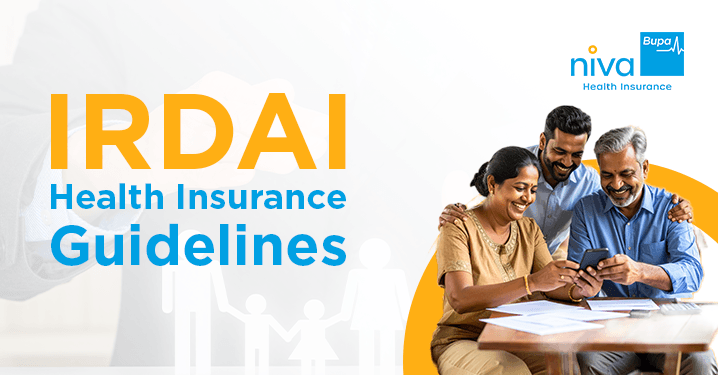
People usually think that buying a health insurance policy and filing it away means the job is done. But they rarely check whether the rules governing that policy have changed in their favour or not. And in the past couple of years, these rules have significantly transformed.
The IRDAI guidelines on health insurance have gone through a great transformation, with updates rolled out across 2024, 2025, and into 2026. These are not minor technical adjustments buried in regulatory documents. Several of these changes directly affect what you are covered for, how long you have to wait before making a claim, and what an insurer can and cannot do when you file one.
If you have not reviewed your policy against the latest IRDAI health insurance regulations, there is a reasonable chance you are either unaware of protections you now have or still holding a policy that no longer reflects current standards. Either way, it is worth knowing what has changed.
What Is IRDAI?
Insurance Regulatory and Development Authority of India (IRDAI) is the statutory body set up by the Government of India to regulate and oversee the entire insurance industry in the country, covering both life and general insurance, including health. Think of it as the watchdog that decides what insurers can and cannot do when they design products, price premiums, process claims, and communicate with customers. Every health insurance company operating in India, whether private or public, has to play by the rules IRDAI sets.
So why should you care? Because when IRDAI changes its guidelines, your policy changes too. Whether it is a shorter waiting period for a pre-existing condition, a rule that prevents your insurer from rejecting a claim without a written explanation, or a mandate that forces insurers to cover patients above 65, these are not abstract regulatory updates. They translate directly into what you are protected against and what you can claim when you actually need medical care. Knowing what IRDAI mandates puts you in a position to hold your insurer accountable, and that is not a small thing when a hospital bill is on the table.
What are the Latest IRDAI Guidelines on Health Insurance?
These are the new guidelines that the Insurance Regulatory and Development Authority of India (IRDAI) has rolled out for health insurance
No Age Barrier for Buying Health Insurance
IRDAI has eliminated upper entry age limits for health insurance policies. Every insurer is now required to offer at least one product to applicants of any age, including those above 60 or 65. This change matters most for families trying to get their parents covered later in life, for retirees who have lost employer-provided group coverage, and for anyone who missed the earlier window. Pre-policy medical tests may still apply for older applicants, and premiums will reflect age-related risk, but the door is now open in a way it simply was not before.
Lifetime Renewability Is Now Strictly Enforced
Lifelong renewability has been a stated principle in Indian health insurance for some time. What has changed under the latest IRDAI health insurance regulations is the enforcement. Insurers can no longer include exit age clauses that terminate a policy at 65 or 70. As long as premiums are paid, the policy must be renewed, regardless of the policyholder's age or claims history. For anyone managing a long-term health condition, or simply planning to stay insured well into their seventies and eighties, this removes a risk that was previously very real.
Severe Medical Conditions Must Be Covered
Under the new non-discrimination norms in the IRDAI guidelines on health insurance, insurers are no longer permitted to blanket-exclude serious conditions like cancer, stroke, renal failure, or AIDS from coverage. If a policy is active and the applicable waiting period has been served, claims for these conditions must be processed. Blanket exclusions for certain diagnoses were previously used to deny claims at the point of filing, even when the policyholder had been paying premiums in good faith for years.
Shorter Waiting Period for Pre-Existing Diseases
The earlier waiting period for pre-existing diseases was four years, which has now been reduced to three years. Conditions like diabetes, hypertension, heart disease, and kidney issues, which are among the most common chronic conditions in the Indian population, are now claimable a full year earlier than they previously would have been. Insurers can voluntarily offer shorter waiting periods, and some do, but three years is now the regulatory ceiling. No insurer can impose a waiting period longer than this for pre-existing conditions under the current IRDAI health insurance regulations.
The Moratorium Period Has Been Cut to Five Years
The moratorium period, which is the period after which an insurer cannot deny a claim on the grounds of non-disclosure of a pre-existing condition, has been reduced from eight years to five years. So, if you have maintained a policy continuously for five years, the insurer can no longer reject a claim by arguing that you failed to disclose a condition in the beginning, unless outright fraud can be proven. This change is particularly relevant for policyholders who have switched insurers through portability, and for those who bought a policy without fully understanding what they needed to disclose.
Policy Documents Must Now Be in Plain Language
The latest IRDAI guidelines on health insurance require insurers to use simple, readable language in policy documents. Jargon-heavy clauses, hidden exclusions buried in sub-sections, and complex terms that do not easily clarify what is actually covered are no longer acceptable under the regulatory framework. Sales materials, policy wordings, and claims communication must all be customer-readable. Penalties apply for non-compliance. This matters because a significant portion of claim disputes in India trace back to policyholders not understanding what they bought.
Claim Rejections Must Come With Written Reasons
According to IRDAI's recent health insurance regulations, insurers are now required to submit a valid reason within the timelines outlined in the rules for all rejections of claims for benefit payments. If an insurer fails to provide an adequate explanation for any denial or fails to respond to a claimant promptly, it will be considered a violation of the regulatory requirements. If a claim is not processed within the stipulated timeframe, the insurer faces penalties. In some interpretations, delays beyond the stipulated window can trigger auto-approval mechanisms.
Portability and Premium Stability Are Better Protected
Portability rules now allow policyholders to move to a new insurer with 45 days' notice, without resetting waiting periods or losing accumulated benefits. The credit you have built up in terms of waiting period completion and no-claim benefits follows you to the new insurer. When upgrading or switching plans with the same insurance company, retention of existing benefits and credits associated with any waiting period is also permitted. In terms of premium stability, IRDAI has enacted norms designed to provide policyholders with stability in the costs associated with insurance, particularly with senior citizens. While premium increases will vary according to age and claims costs, the imposition of vague or disproportionate premium increases will not be allowed by IRDAI.
Group Health Insurance: More Transparency for Employees
Employers and insurers will now have to notify employees of any change(s) in renewal terms, changes in benefits structures or premium hikes at least 30 days before renewal. In turn, this new regulation means that employees will not be blindsided by reduced coverage during renewal or hospitals that are included in their corporation plan at renewal. Having advance notice allows employees to determine whether or not they need to obtain an additional personal policy.
AYUSH Treatments Are Now Coverable
As of now, health insurance policies cover Ayurvedic, Yoga, Unani, Siddha, and homoeopathic treatments (up to the limits specified within the plan) when the treatment is done by a recognised network hospital. This creates a great deal of healthcare that is covered by formal health insurance policies for a vast number of Indian families.
What Should You Consider Before Buying Health Insurance in 2026?
Buying health insurance in 2026 is not the same as it was five years ago. The regulatory framework has evolved, and so should the way you evaluate a policy. Here is what IRDAI's current guidelines say you should be paying attention to before you sign anything.
Check Whether the Policy Offers Lifetime Renewability
Additionally, the IRDAI has introduced new rules that mandate all health insurance policies to be renewable for the life of the insured. When evaluating a policy, you must ensure it does not have an exit age clause; policies that terminate at age 65 or 70 are non-compliant with current regulations and will leave you without coverage at the moment you most need it.
Understand the Waiting Period for Pre-Existing Diseases
The latest IRDAI regulations limit an insurer to a maximum of three years waiting for pre-existing medical conditions. This includes diabetes, hypertension, and heart disease. If your policy has a waiting period longer than three years for these types of health issues, that could be a consideration against purchasing the policy. Some insurers voluntarily offer shorter waiting periods; if you have managed diabetes, hypertension or heart disease before purchasing a policy, this may be an especially important factor to consider.
Look for Plain-Language Policy Documents
IRDAI now requires insurers to use simple, readable language in all policy documents. If the policy you are reviewing is filled with dense clauses and buried exclusions that require a lawyer to interpret, that is not just inconvenient. It is non-compliant with current standards. A good policy should be something you can read and understand yourself.
Verify That Severe Conditions Are Not Blanket-Excluded
Under the latest non-discrimination norms, insurers cannot categorically exclude serious conditions like cancer, stroke, renal failure, or AIDS from coverage. Before purchasing, check the exclusions list carefully. If a plan excludes entire categories of serious illness regardless of waiting period compliance, look elsewhere.
Confirm the Claim Rejection Process
Insurance providers (insurers) are required under the guidance of the Insurance Regulatory and Development Authority of India (IRDAI) to provide an explanation in writing of the reasons for denying claims within a prescribed time limit. Check the claim settlement ratio of the insurer before purchasing a policy.
Assess the Sum Insured Against Medical Inflation
IRDAI guidelines do not set a minimum sum insured, but medical inflation in India is currently running at approximately 14 per cent annually. A coverage amount that felt adequate three years ago may leave a significant gap today. As a general benchmark for 2026, financial advisors recommend a minimum of Rs. 10 lakh for individuals in metro cities, with higher amounts for families or those with existing health conditions.
Understand Portability Rights Before You Commit
If you are switching from an existing plan, IRDAI's portability rules guarantee that your waiting period credits and accumulated benefits follow you to the new insurer. You do not start from scratch. Understanding this right before purchasing gives you the flexibility to move if a better plan becomes available later, without losing what you have already built up.
Check for AYUSH Coverage If Relevant
If you or your family regularly uses Ayurveda, Homoeopathy, or other AYUSH treatments, confirm that the policy covers these at recognised network hospitals. IRDAI now allows insurers to include AYUSH treatments within the policy scope, but not all plans do. If this matters to your household, verify it explicitly before buying.
Read More : IRDAI Insurance Agent Registration Process Online
Final Thought
These changes represent a meaningful shift in how health insurance works in India. Shorter waiting periods, mandatory coverage for serious conditions, stricter claim denial rules, and plain-language documents all move in the same direction: more protection for the policyholder, less room for insurers to operate in ways that disadvantage customers.
The practical step is to pull out your current policy and review it against these points. Check the waiting period, check the renewal clause, and check whether the exclusions in your document reflect the current regulatory standards. If your policy predates these changes and has not been updated, it is worth having a conversation with your insurer or switching to one that is fully compliant. If you are looking for health insurance that already reflects these updated IRDAI health insurance regulations, we provide plans that are structured to current standards, with clear terms, a strong claim settlement record, and coverage that does not leave you guessing.
Frequently Asked Questions
1. Does GST on health insurance affect these rules?
GST on individual health insurance policies are now 0% (previously supported by 18% group insurance policies) since September 2025. This means premiums are lower and could lead to an increase in base rates from insurers.
2. How long do insurers have to approve cashless claims?
Insurers have to approve cashless claims within 3 hours after discharge from a hospital or incur penalties.
3. Do the new regulations apply to existing policies?
Yes. Benefits provided (i.e., shorter waiting periods, renewability) will continue to exist for existing policies once renewed and will be in full compliance upon renewal; you will need to review policy words to see how much benefit is available.
4. Can I get multiple claims for one illness from different insurers?
Yes. One of the new flexibility provisions under these regulations is that an insured person may submit multiple claims related to the same illness for the same loss (i.e., each policy would cover a different limit).
Get right coverage, right premium and the right protection instantly.
Mobile Number
 By clicking, I agree to Niva Bupa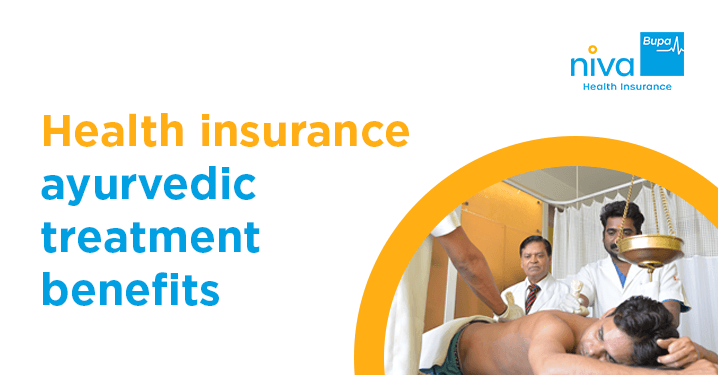
Popular Searches
Health Insurance - Health Insurance | Best Family Health Insurance | Best Health Insurance For Senior Citizens In India | Health Insurance With Opd Cover | Mediclaim Insurance | Critical Illness Insurance | Personal Accident Insurance | Mediclaim Policy | Individual Health Insurance | Maternity Insurance | Best Health Insurance company | NRI Health Insurance
Health Insurance Schemes - PMMVY Login | PMJJBY Policy Status | Swasthya Sathi Card | PMSBY | ABHA Card Download | PMJJBY | Ayushman Card | PMMVY 2.0 | Ayushman Vay Vandana Card | PMMVY NIC IN रजिस्ट्रेशन | PMMVY 2.0 लॉगिन
Travel Insurance Plans - Travel Insurance | International Travel Insurance | Student Travel Insurance | Travel Insurance USA | Travel Insurance Canada | Travel Insurance Thailand | Travel Insurance Germany | Travel Insurance Dubai | Travel Insurance Bali | Travel Insurance Australia | Travel Insurance Schengen | Travel Insurance Singapore | Travel Insurance UK | Travel Insurance Vietnam | Travel Insurance Japan | Travel Insurance Spain | Travel Insurance Asia | Travel Insurance Netherlands | Travel Insurance Turkey | Travel Insurance Ireland | Travel Insurance Phillipines | Travel Insurace Italy | Travel Insurance France | Travel Insurance China | Travel Insurance Georgia | Travel Insurance South Africa | Travel Insurance Maldives | Travel Insurance Portugal | Travel Insurance Malaysia | Travel Insurance Qatar | Travel Insurance Poland | Travel Insurance Greece | Travel Insurance New zealand | Travel Insurance Saudi Arabia | Travel Insurance Sri Lanka
Become an Agent - Insurance Agent | Insurance Advisor | Licensed Insurance Agent | Health Insurance Consultant | POSP Insurance Agent | IRDA Certificate Download | IC 38 Exam | Insurance Agent vs POSP | IRDA Exam Syllabus | IRDAI Agent Locator | IRDA exam fee | Paise Kaise Kamaye | Ghar Baithe Paise Kaise Kamaye
Top Hospitals - Best Hospitals in Chennai | Top Hospitals in Delhi | Best Hospitals in Gurgaon | Best Hospitals in India | Top 10 Hospitals in India | Best Hospitals in Hyderabad | Best Hospitals in Kolkata | Best cancer hospitals in Bangalore | Best cancer hospitals in Hyderabad | Best cancer hospitals in Mumbai | Best cancer hospitals in India | Top 10 cancer hospitals in India
Others - Ayushman Bharat | Gst Refund for NRI on Health Insurance Premium | Health Insurance Tax Deductible
Health & Wellness - शिलाजीत के फायदे हिंदी | Weight Gain Diet in Hindi | Sat Isabgol Uses In Hindi | Aloe Vera Juice Benefits in Hindi | Dragon Fruit Benefits in Hindi | Akal Daad in Hindi | Acidity Home Remedies in Hindi | Nikat Drishti Dosh in Hindi | Yoga Benefits in Hindi | Laung Khane ke Fayde in Hindi | Leukoplakia in Hindi | Protien in 100g Paneer | Benefits of Rice Water For Skin | B12 Deficiency Symptoms in Hindi | Fibre Foods in Hindi | Chronic Disease Meaning in Hindi | Vitamin D Foods in Hindi | Blood Urea in Hindi | Beetroot Uses Good for Health
Calculator - BMI Calculator | Pregnancy Calculator | Pregnancy Calendar Based on Conception Date | Pregnancy Conception Date Calculator | Last Menstrual Period Calculator | BMR Calculator | GFR Calculator | Ovulation Calculator


www.nivabupa.com

+91 11 30902010

1860-500-8888

CIN: L66000DL2008PLC182918
IRDAI Registration No. 145

Corporate Office: 3rd Floor, Capital Cyberscape, Sector 59, Gurgaon
Registered Office: C-98, First Floor, Lajpat Nagar, Part 1, Delhi-110024, India


