


1 Crore Health Insurance Plans
Secure your family's health with a 1 crore health insurance plan, offering extensive coverage to tackle rising medical costs. With health insurance for 1 crore, you gain peace of mind and financial security against unexpected medical emergencies.
Network of 10,000+ cashless Hospitalisation
30 Mins Cashless Claim Policy
2 Crore+ Happy customers
Start your Health cover
With Niva Bupa Today!
Rated by mint as India's Best Health Insurer 2024
Quick Links

Network Hospital
Find hospitals near you that are covered under our insurance network for hassle-free cashless treatment

Family Health Insurance
Get comprehensive coverage for your entire family under a single health insurance plan.

Claim Settlement Ratio
Check our track record for successfully settled claims, ensuring peace of mind when you need it most.

Premium Calculator
Calculate your insurance premium easily to choose a plan that fits your budget.

Best Insurance Plans
Explore our top-rated insurance plans that offer extensive benefits for various healthcare needs.
Benefits of 1 Crore Health Insurance
If you're considering a ₹1 crore health insurance plan and want to understand what it offers, the key benefits are outlined below. Explore how high coverage can secure your family's health and finances in times of need.
Comprehensive Financial Protection:
A 1 crore medical insurance plan covers high-cost treatments, hospitalisations, and surgeries, ensuring you don’t deplete your savings during medical emergencies.

1 Crore Health Insurance
A ₹1 crore health insurance plan is a high sum insured policy that pays eligible hospital bills up to ₹1 crore in a policy year, on a cashless or reimbursement basis. It suits families in metro cities, people with dependants, and anyone whose employer cover is thin or temporary. What it pays in practice depends on room rent limits, co-payment, sub-limits, waiting periods capped at 36 months for pre-existing conditions, and exclusions.
Why Might You Need Health Insurance Worth ₹1 Crore?
Most hospital stays in India are small enough to settle from a savings account. The few that are not are the reason a ₹1 crore cover exists. This section looks at what government surveys say about the money households actually pay, how fast that money is growing, and why a hospital in one city can cost very differently from another.
How Can Major Hospital Bills Affect Your Savings?
The latest official numbers show a wide gap between a typical hospital stay and a costly one. The NSS 80th Round, run by MoSPI between January and December 2025, found that the average out-of-pocket spend per hospitalisation (excluding childbirth) was ₹34,064, while the median was only ₹11,285. When the average is three times the median, a small group of very expensive cases is pulling it up. Those are the cases that drain savings.
Two things stand out. Private care costs about 7.6 times what public care does (₹50,508 ÷ ₹6,631), and more than 60% of hospitalisations now happen in private facilities. Also remember that these are amounts households paid themselves. The gross hospital bill for an insured patient can be far higher.
At the macro level, the Health Ministry's National Health Accounts for 2021-22 put total health expenditure at ₹9,04,461 crore, or 3.83% of GDP, with households still paying 39.4% of it directly. Later estimates for 2022-23 put that share at 43.4%, so the trend hasn't been one-way.
Why Should You Consider Future Healthcare Costs?
The sum insured you pick today has to work in 10 or 20 years, not just this year. Actuarial estimates put India's medical trend at 12% in 2024 and 13% for 2025, against general inflation of about 4.2%. Compounded, that gap is large. The table below uses 12%, the lower of the two figures, and is an illustration, not a forecast.
If costs keep compounding at that rate, a ₹10 lakh procedure today could cost almost ₹1 crore in 20 years. Inflation will not be this steady, and premiums also rise with age, but the logic holds: a larger cover bought early gives you room to age into.
How Can Treatment Costs Vary Across Indian Cities?
There is no official, city-by-city price list for hospital procedures, so any page that quotes one for Delhi versus Pune should be read with caution. Government data does show how costs and care patterns differ between urban and rural India, and how heavily households in some states carry the bill themselves. Cities with more private hospitals and super-speciality centres generally push the average up.
Urban households paid about 23% more per case (₹38,688 against ₹31,484). Rural coverage is higher mostly because government-sponsored schemes reached 45.5% of the rural population, so the comparison does not mean rural families hold more private cover.
State averages hide big differences too. In NHA 2021-22, households in Uttar Pradesh bore 64% of health spending out of pocket, followed by Kerala at 59% and West Bengal at 58%. If you live in a metro and use corporate hospital chains, your exposure is likely to be above the national average, making a higher sum insured practical.
What Does ₹1 Crore Health Insurance Cover?
A ₹1 crore policy covers the same categories of expense as a ₹10 lakh one. What changes is the ceiling and, in many plans, the number of conditions attached. Think of the sum insured as the maximum the insurer pays in a policy year, and the benefits below as the heads under which that money can be used.
Which Hospitalisation Expenses Can the Policy Pay For?
The core cover is in-patient treatment: when a doctor admits you for more than 24 hours, the policy pays for what the hospital bills for that stay. IRDAI's 2024 Master Circular on Health Insurance Business standardised how these terms are defined, so "room rent" and "day-care" should mean the same thing. The usual heads are:
ICU or ICCU charges
Blood, oxygen and procedure-related charges
Surgeon, anaesthetist, specialist and consultant fees
Operation theatre charges, implants and consumables
Medicines, drugs and diagnostic tests ordered during the stay
Room rent and nursing charges, subject to any limit in your variant
Are Day-Care Procedures and Modern Treatments Covered?
Yes, in most plans. Day-care procedures are treatments that no longer need a 24-hour stay because of technology, such as cataract surgery, dialysis, chemotherapy and radiotherapy. Many modern options, including robotic surgery and oral chemotherapy, are covered by newer plans, often with conditions. The honest check is the policy wording, since "modern treatment" benefits are usually capped or listed by name.
How Do Pre- and Post-Hospitalisation Benefits Work?
Pre-hospitalisation covers medical expenses in the days before you are admitted, such as consultations and tests that led to the admission. Post-hospitalisation covers follow-up care, medicines and review visits after discharge. Both are tied to the same illness and fall within the same claim, not on top of it. Common windows are 30 to 60 days before and 60 to 180 days after, and higher variants are usually more generous.
Raise the claim for these costs within the time limit the policy gives
Check whether the period is counted from the admission or discharge date
Keep every prescription, diagnostic report and pharmacy bill, since each needs to link to the admission diagnosis
What Should You Know About Ambulance Charges and Other Benefits?
Road ambulance charges are usually covered, up to a set amount per hospitalisation or up to the sum insured in some plans. Beyond that, plans at this level typically add features that smaller covers leave out. They are optional or variant-specific, so treat the list as things to ask about, not promises.
Air ambulance cover in select plans
Annual preventive health check-ups
Cover for organ donor hospitalisation
Tele-consultation and wellness rewards
International or overseas treatment cover (usually capped)
Restoration or reinstatement of the sum insured after a claim
Who Should Consider ₹1 Crore Health Insurance?
Not every household needs a ₹1 crore policy, and anyone who says otherwise is selling. The cover makes the most sense when three things line up: treatment is likely to happen in a private or corporate hospital, other people depend on your income, and no employer or government scheme is carrying the load. The profiles below test each of those.
Is ₹1 Crore Cover Suitable for Metro City Residents?
If you live in a metro and would choose a corporate hospital by default, a ₹1 crore cover is a reasonable starting point, not an extravagance. Urban households in the NSS paid an average of ₹38,688 per hospitalisation, with 64.6% of admissions in private hospitals.
Should Families With Dependants Consider Higher Coverage?
Yes, because the real risk for a family is not one hospital bill. It is a hospital bill arriving while income is disrupted. The NSS found that 3.2% of urban and 2.7% of rural residents were hospitalised in a year. That sounds low, until you apply it to a household.
Take a four-member urban family. If each person has a 3.2% annual chance of admission, the chance that at least one of them is admitted in a given year works out to about 12% (1 − 0.968⁴). Over ten years, that rises to roughly 73%. This is simple arithmetic that assumes admissions are independent, but it shows why "nobody in my family is ever in hospital" is a weak plan.
Children's and parents' conditions can strike in the same year
A sole earner's illness hits treatment cost and household income together
A larger sum insured protects the family's savings, the child's education fund and the home loan EMI from being used for the hospital
When Might Professionals and Business Owners Need More Cover?
Salaried professionals often rely on employer group insurance, and that is where the gap hides. Group cover typically ends the day you leave the job, and the sum insured is usually modest. Self-employed people and business owners have no group cover at all, and an illness can also stop the revenue that would have paid for it.
The tax benefit is real but small relative to a ₹1 crore premium. The Section 80D limit for a senior citizen and senior-citizen parents together is ₹1 lakh, which at a 30% slab plus 4% cess saves ₹31,200. The deduction applies under the old tax regime, so check which regime you file under.
Should People With Existing Health Conditions Review Their Sum Insured?
Yes, and early. IRDAI's framework sets a maximum waiting period of 36 months for pre-existing diseases and a 60-month moratorium after which a claim cannot be contested on non-disclosure grounds. A condition like diabetes or hypertension can lead to complications such as kidney, heart or eye problems that cost far more than the original illness. A higher sum insured gives those downstream treatments room.
Is ₹1 Crore Health Insurance Enough for Your Family?
For most families, ₹1 crore is enough for a single serious event and, with restoration, for a bad year. Whether it is enough depends less on the headline figure and more on how the cover is shared: one pool for everyone, or a separate limit for each person. The answer also changes once parents above 60 enter the picture.
How Does an Individual Policy Differ From a Family Floater?
An individual policy gives each named person a separate sum insured. A family floater gives all members one shared sum insured that any of them can use. Neither is better in the abstract. A floater is cheaper to buy and lets one person draw the full amount. Individual policies protect each member's own limit and keep one person's big claim from affecting anyone else.
If a father needs ₹40 lakh for treatment, the floater pays it all and leaves ₹60 lakh for everyone else. With individual ₹25 lakh policies, he is ₹15 lakh short. Reverse the case, though: if three members are admitted in the same year, a floater can run dry sooner.
What Happens When Multiple Family Members Need Treatment?
The shared pool is drawn down claim by claim, and anything beyond it is yours to pay unless your plan restores the cover. This is where restoration features matter most. Plans with a restoration benefit refill the sum insured after it is partly or fully used in a policy year, subject to the conditions in the wording.
Illustration (hypothetical numbers): three members are admitted in one year with claims of ₹45 lakh, ₹35 lakh and ₹30 lakh, a total of ₹1.10 crore.
Should You Consider Separate Cover for Senior Parents?
Usually, yes. In most floaters, the premium follows the eldest member's age, so adding 65-year-old parents to a young family's policy raises everyone's cost. Waiting periods and pre-existing conditions are also likelier to matter for them. A separate policy keeps the family floater lean and gives the parents their own sum insured.
Government support is worth factoring in. Under the Cabinet decision extending AB PM-JAY, every citizen aged 70 or above is eligible for ₹5 lakh of cover a year regardless of income, including those who already hold private insurance. Section 80D also allows up to ₹50,000 for premiums paid for senior-citizen parents, separately from the deduction for your own family.
How Does ₹1 Crore Health Insurance Compare With ₹5 Lakh and ₹50 Lakh Cover?
The three sum insured levels are built for different risks. ₹5 lakh handles routine admissions, ₹50 lakh covers most serious illnesses, and ₹1 crore covers rare, long, expensive cases and years when costs have compounded. Comparing sum insured alone misses what the cover is worth in practice, so this section does the arithmetic and then looks at what else deserves a place on the checklist.
How Does the Available Financial Protection Differ?
The cleanest way to compare is to ask how many average hospital stays each cover can absorb, and what it will be worth later. The table uses the NSS 80th Round averages of ₹34,064 for all hospitalisations and ₹50,508 for private hospitals. These are household-paid averages used as a yardstick, not predictions of any one bill.
A fair reading is this. ₹5 lakh is exactly the amount the government's AB PM-JAY scheme provides per family per year, so it is a baseline, not generous protection for a private-hospital user. ₹50 lakh is enough for most single-illness events today. ₹1 crore matters when you want the same protection to hold up a decade from now.
Could a Super Top-Up Be an Alternative?
Sometimes it is the smarter route. A super top-up is a separate policy that starts paying once your claims in a year exceed a deductible you set to match your base cover. It costs less per rupee of cover than a large base plan. The trade-off is that you manage two policies and two sets of terms.
A super top-up sums claims across the whole year when applying its deductible. A plain top-up applies the deductible to each claim separately, which makes it weaker for people who may be admitted more than once. Premiums on the base policy and the top-up both fall under the Section 80D limits, within the same overall limits.
Which Features Should You Look for in ₹1 Crore Health Insurance?
A high sum insured loses value if the policy adds conditions. Four features decide how much of the ₹1 crore actually reaches the hospital: how the policy treats room rent and co-payment, whether the cover refills after a claim, how it grows when you don't claim, and how long the waiting periods run. Check these in the policy wording, not the brochure headline.
How Can Restoration Benefits Help After a Claim?
Restoration refills your sum insured, wholly or partly, after you have used it in a policy year. For a ₹1 crore cover, it is a second layer of safety: if one admission uses ₹70 lakh, a restoration benefit can bring the available cover back so the next claim is not squeezed. Conditions vary, and they are where the differences between plans lie.
What Do Cumulative Bonuses and Carry-Forward Benefits Offer?
A cumulative bonus rewards claim-free years by raising your cover or lowering your premium. IRDAI's Master Circular lets insurers offer this as either an increased sum insured or a premium discount, and the bonus should carry over if you move insurers, subject to the previous sum insured.
As a generic illustration, a plan that adds 50% of the base sum insured for each claim-free year, up to 100%, takes a ₹1 crore cover to ₹1.5 crore after one clean year and ₹2 crore after two. Some Niva Bupa plans go further with carry-forward of unused sum insured, covered in the section below.
Check whether the bonus is reduced after a claim, and by how much
Check the cap on total accumulation
Confirm that the bonus is not just a premium discount, if you wanted a bigger cover
Why Should You Check Waiting Periods and Disease-Specific Limits?
Waiting periods decide when a claim becomes payable, and disease-specific limits decide how much. IRDAI's framework caps the waiting period for pre-existing diseases and specified diseases at 36 months, and the moratorium at 60 months of continuous cover.
Sub-limits are the other half. Some plans cap certain treatments at a fixed amount even within a ₹1 crore sum insured. If a procedure you are likely to need is on that list, the headline number is not what you will receive.
How Can Niva Bupa Help You Explore Higher Health Cover?
We offer two routes to ₹1 crore and beyond: base plans with a high sum insured from day one, and a super top-up that increases an existing cover. The right pick depends on whether you want a single policy to manage or the lower premium that a split structure can give. The plan details below should be read with the current brochure on our website, since variants and sum insured options are updated over time.
Which Niva Bupa Plans Offer the Required Sum Insured?
Four base plan families reach ₹1 crore or more, and a super top-up can build the same total on top of your existing policy. The table shows where each one sits. Heartbeat and Health Pulse, which stop below ₹1 crore, suit ₹50 lakh and lower better.
How Do ReAssure and Aspire Features Work?
ReAssure's headline benefit is ReAssure Forever: after a claim, the base sum insured is restored to 100% for later claims in the same policy year, with each claim paid up to the base sum insured. Booster+ lets unused base sum insured carry forward to later years, up to 10 times the base, with the exact limit depending on the variant. Aspire's selling points are its borderless international hospitalisation cover and Lock the Clock+, which is meant to protect against age-linked premium increases.
A worked example makes the first one easier to picture. Take a ₹1 crore ReAssure base cover and a first claim of ₹60 lakh. Without restoration, ₹40 lakh would be left for the rest of the year. With ReAssure Forever, the next claim can again draw up to ₹1 crore. The wording defines what "restored" means for the same illness, so read that clause.
Can Health Recharge Supplement Your Existing Cover?
Yes, that is exactly what a super top-up is for. Health Recharge sits above a base policy and pays only after your claims in a year cross a deductible. If your employer gives you ₹5 lakh of group cover and you add a ₹95 lakh super top-up with a ₹5 lakh deductible, a single claim has up to ₹1 crore of protection.
If your base cover is group insurance and you change jobs, the base disappears, and the deductible is suddenly yours to pay. In that case, it's safer to keep a personal base policy so the deductible is always covered.
What Should You Know About Registered Hospitals and Cashless Claims?
Cashless means we settle the hospital directly, so you only pay non-payable items. It works at registered hospitals. Under IRDAI's 2024 Master Circular, insurers must decide a cashless request within one hour and give final authorisation within three hours of the hospital's discharge request. The Government's reply to Parliament provides compliance data for the first ten months.
For a planned admission, request pre-authorisation a few days ahead and carry your health card and ID. In an emergency, inform us as soon as the hospital allows, within the time stated in your policy. If a claim is wrongly rejected, you can go to Niva Bupa’s grievance team, then the Bima Bharosa portal, and then the Insurance Ombudsman.
How Could ₹1 Crore Health Insurance Work in Different Situations?
Numbers on a brochure don't tell you how a policy behaves when a hospital bill actually lands. The four scenarios below are built from hypothetical figures, so treat the amounts as illustrations of how the mechanics work and not as typical bills. The names are invented.
Scenario 1: A Family Managing a Major Hospital Admission in Mumbai
Rohan (41), his wife Meera (38) and their two children hold a ₹1 crore family floater. Rohan needs bypass surgery at a private hospital, and later in the year their son is admitted for a ₹4 lakh procedure. The table compares what the family pays with a ₹1 crore floater and a ₹10 lakh floater with no restoration.
Scenario 2: A Professional Reviewing Employer Cover in Bengaluru
Ananya (33) is a product manager whose company provides ₹5 lakh of group health cover. She has been planning a job move and wonders whether a personal ₹1 crore policy is worth buying alongside it. She audits what she has.
Her conclusion is to buy a personal ₹1 crore base policy now, at 33, so the pre-existing disease and specified-disease waiting periods are already running if she needs the cover later. While both policies are active, the Master Circular lets her choose which policy to claim against, so she can use the employer cover first for small claims and keep the personal sum insured intact for the big ones. And her premium on the personal policy now carries no GST and qualifies for the Section 80D deduction under the old tax regime.
Scenario 3: A Policyholder Comparing Base Cover With a Super Top-Up
Karan (45) has held a ₹10 lakh base policy for six years, so his moratorium period is already complete. He is choosing between raising the base to ₹1 crore and adding a ₹90 lakh super top-up with a ₹10 lakh deductible. He tests both against two claims in one year: ₹12 lakh, then ₹30 lakh.
Scenario 4: A Self-Employed Consultant With a Pre-Existing Condition in Pune
Neha (38) runs a design consultancy and has no employer cover. Her husband Aman (40) has Type 2 diabetes. They buy a ₹1 crore floater and declare the condition on the proposal form. This case is useful because the policy's behaviour changes over time, and the timeline is what matters.
What Is Not Covered Under ₹1 Crore Health Insurance?
A large sum insured does not widen what the policy covers. It only raises the amount payable on what is already covered. Claims get reduced or refused for three broad reasons: the condition falls inside a waiting period, the treatment or item is excluded, or a policy limit trims the payout. Knowing these before you buy costs nothing, and learning them at the hospital counter costs a lot.
How Do Pre-Existing Disease Waiting Periods Apply?
A pre-existing disease is a condition you already had, or were treated for, before the policy began. IRDAI now treats a condition as pre-existing if it was diagnosed or treated up to three years before purchase, down from four, and it caps the waiting period for these conditions at 36 months. We pay treatment for the declared condition only after that wait.
Which Treatments and Expenses May Be Excluded?
Exclusions differ from plan to plan, but most share the same themes. The list below is a guide to what to look for, and the policy wording is final. A "no" here often has a narrow exception, such as dental treatment after an accident, so read the exception along with the exclusion.
What Are the Eligibility Criteria for ₹1 Crore Health Insurance?
Eligibility for a ₹1 crore cover is decided by three things: your age, your medical history, and the paperwork you can supply. Most applicants who are open about their health and keep their documents in order get through without trouble.
What Age and Medical Conditions Should You Check?
There is no upper age limit for buying a health policy. IRDAI's 2024 framework removed the maximum entry age for new health insurance, and it requires insurers to offer lifetime renewability. Adults can buy from 18, and dependent children can be added as family members. What does change with age is the premium and how closely the insurer reviews your health.
For medical conditions, disclose everything: diabetes, blood pressure, thyroid, past surgeries, medicines you take, smoking and alcohol habits. A short disclosure is not a safe disclosure. The 60-month moratorium protects you after five years, but within that window an omission can cost a claim.
Which Documents Are Required?
The proposal form is the core document, and the rest of the file supports what you say in it. Insurers must also complete KYC checks. A few extra papers are common at higher sums insured, so it saves time to gather them before you start.
How Can You Choose and Buy ₹1 Crore Health Insurance?
Buying a high-value policy works best as a sequence: work out how much you really need, shortlist plans on features rather than price alone, read the conditions, fill in the form honestly, and then check the policy you receive. Skipping the first and last steps is how people end up with the wrong cover or a policy that doesn't match what they were told.
Step 1: Assess Your Existing Cover and Financial Needs
Start with the largest bill you would want to survive, then adjust for time and for cover you already hold. A simple method is to estimate the cost of one serious private-hospital episode in your city today, decide how many such events you want to withstand, and scale for inflation. Here is a worked example with assumed numbers.
The result is a range, not a verdict. If your total is closer to ₹50 lakh, a ₹25 lakh base with a super top-up may fit. If you are planning for a long horizon, or your family history points to severe illness, ₹1 crore or more is easier to justify. Count only personal cover, since group cover can disappear when you change jobs.
Step 2: Compare Available Plans and Benefits
Shortlist three plans and compare them on the same sheet. Use the checklist from the comparison section: room rent, co-payment, restoration, bonus, waiting periods, sub-limits and network. Then add two practical checks: the cashless record and how it handles complaints.
Ask for the policy wording, not only the brochure
Confirm which variant offers the ₹1 crore sum insured
Check that the hospitals you would actually use are in the cashless network
Step 3: Review Premiums, Waiting Periods and Exclusions
Premium is the number everyone looks at first and should be the third thing you weigh. It depends on the age of the eldest insured member, the sum insured, the variant, add-ons and any declared conditions. Since 22 September 2025, individual and family floater policies carry no GST.
Step 4: Complete the Proposal Form and Disclose Your Medical History
The proposal form is a legal declaration. Fill it yourself, or read it closely if an agent fills it for you. Anything you leave out can be used to reject a claim within the first 60 months of continuous cover.
List every diagnosed condition, even if it is controlled by medicine
Include surgeries, hospital stays and ongoing treatment from the past several years
Declare smoking, alcohol use and family history if asked
Keep copies of what you submitted
Answer the queries and medical tests promptly, as delays can hold up issuance
Step 5: Review the Issued Policy Documents
When the policy arrives, you have a free-look period to read it and cancel it if it doesn't match what you applied for. Compare the schedule and the wording against your proposal. You can fix mistakes caught in the first few weeks for free.
Frequently Asked Questions
Is ₹1 crore health insurance available in India?
Yes. IRDAI-regulated insurers sell health plans at ₹1 crore and above. Niva Bupa offers a ₹1 crore sum insured on plans such as ReAssure 2.0 and Aspire, higher bands on Health Premia, and an unlimited base option on ReAssure 3.0. You can also reach ₹1 crore by pairing a base policy with the Health Recharge super top-up.
How much does ₹1 crore health insurance cost?
It depends on the eldest member's age, family size, plan variant, add-ons, and whether any condition is declared. No single price applies to everyone, so use our premium calculator for your profile. One fixed point: individual and family floater premiums have carried no GST since 22 September 2025. A base premium of ₹30,000 that once cost ₹35,400 with 18% GST now costs ₹30,000, if the base rate is unchanged.
Can I buy ₹1 crore health insurance for my family?
Yes, as a family floater where everyone shares the ₹1 crore, or as individual policies with separate limits. A floater is usually cheaper, and the premium generally follows the eldest member. For parents above 60, a separate policy often keeps the cost down. See the family section above for a side-by-side comparison. Parents aged 70 and above are also eligible for the government's Ayushman Vay Vandana cover of ₹5 lakh.
Does ₹1 crore cover include critical illness treatment?
Hospital treatment for conditions like cancer, heart surgery or organ failure is covered as in-patient or day-care care, up to the sum insured and subject to waiting periods and sub-limits. This differs from a critical illness benefit, which pays a fixed lump sum on diagnosis and is sold as a separate plan or add-on. Check whether your ₹1 crore plan includes one.
Can I get ₹1 crore cover with a pre-existing disease?
Often, yes, with conditions. IRDAI's framework says insurers cannot refuse cover solely because of a serious condition, though the policy may carry a waiting period of up to 36 months, a loading or an exclusion for that condition. After 60 continuous months, claims cannot be rejected for non-disclosure, except in established fraud. Always declare it on the form.
Is ₹1 crore cover better than a super top-up?
Neither wins in every case. A ₹1 crore base policy is simpler: one set of terms, one claim process, and restoration and bonus benefits that work on the full amount. A super top-up costs less for the same total, but you manage two policies, and the deductible must always be filled by a base cover you control.
Which Niva Bupa plans offer ₹1 crore cover?
ReAssure 2.0 and Aspire go up to ₹1 crore. Health Premia (Platinum) sits in the ₹1 crore to ₹3 crore band, and ReAssure 3.0 includes an unlimited base sum insured option. For a combination, you can add Health Recharge, the super top-up, to a base plan. Plan names, bands and variants are updated from time to time.


Frequently Asked Questions
Our Satisfied
Customers
Watch what our customers are saying. REAL STORIES with REAL IMPACT!

Vippan Kapur
It is unbelievable how Niva Bupa claim team came to my aid, Monday to Sunday no day off.

Meenakshi Khanna
Within few hours we got the claim number and in the next three days the amount was reflected in our bank account.

Vijay Kapoor
With the help of Niva Bupa Health Insurance, I was able to get my son treated without worrying about the high medical cost.

Diviay Chadha
Whenever we have filed for a claim with Niva Bupa, the process was very smooth and people were very helpful.
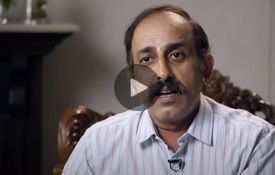
Parveen Singh
The Niva Bupa team was extremely helpful, be it day or night, someone was always available.


www.nivabupa.com

+91 11 30902010

1860-500-8888

CIN: L66000DL2008PLC182918
IRDAI Registration No. 145

Corporate Office: 3rd Floor, Capital Cyberscape, Sector 59, Gurgaon
Registered Office: C-98, First Floor, Lajpat Nagar, Part 1, Delhi-110024, India


